Bad Kissingen Authentic Indian Ayurveda in Germany.
Bad Kissingen is a secluded place steeped in the magic of healing. ‘Discover life’ is the motto of the spa town of Bad Kissingen. Green spaces and parks, rose gardens and spas, the Franconian Saale river winding its way through the town — here it is easy to rediscover life, to find time for relaxation, time for body, mind and soul, time for health.
Your stay at the Bad Kissingen Health and Ayurveda Centre will help you to relax physically and mentally, restore your strength and restart your body's regeneration processes.
In its own wellness department, in addition to treatments, a variety of procedures are offered: from foot baths with rose petals to aromatic massages with oils, as well as various cosmetic procedures.
Bad Kissingen Authentic Indian Ayurveda in Germany.
Bad Kissingen is a secluded place steeped in the magic of healing. ‘Discover life’ is the motto of the spa town of Bad Kissingen. Green spaces and parks, rose gardens and spas, the Franconian Saale river winding its way through the town — here it is easy to rediscover life, to find time for relaxation, time for body, mind and soul, time for health.
Your stay at the Bad Kissingen Health and Ayurveda Centre will help you to relax physically and mentally, restore your strength and restart your body's regeneration processes.
In its own wellness department, in addition to treatments, a variety of procedures are offered: from foot baths with rose petals to aromatic massages with oils, as well as various cosmetic procedures.
Advantages of the Bad Kissingen Ayurvedic Centre
- Indian to German translators are available 6 days a week.
- The only centre in Europe where patients and guests are treated by a permanent team of experienced Indian therapists from Kerala.
- Thanks to cooperation with German therapist Dr. Winfried Breitenbach, the clinic can issue invoices in accordance with the tax regulations for doctors in Germany, allowing privately insured individuals to undergo official treatment on their insurance.
- As one of the few Ayurvedic centres in Europe, the clinic uses a wide range of Ayurvedic oils and herbs, which have been carefully selected and imported directly from India.
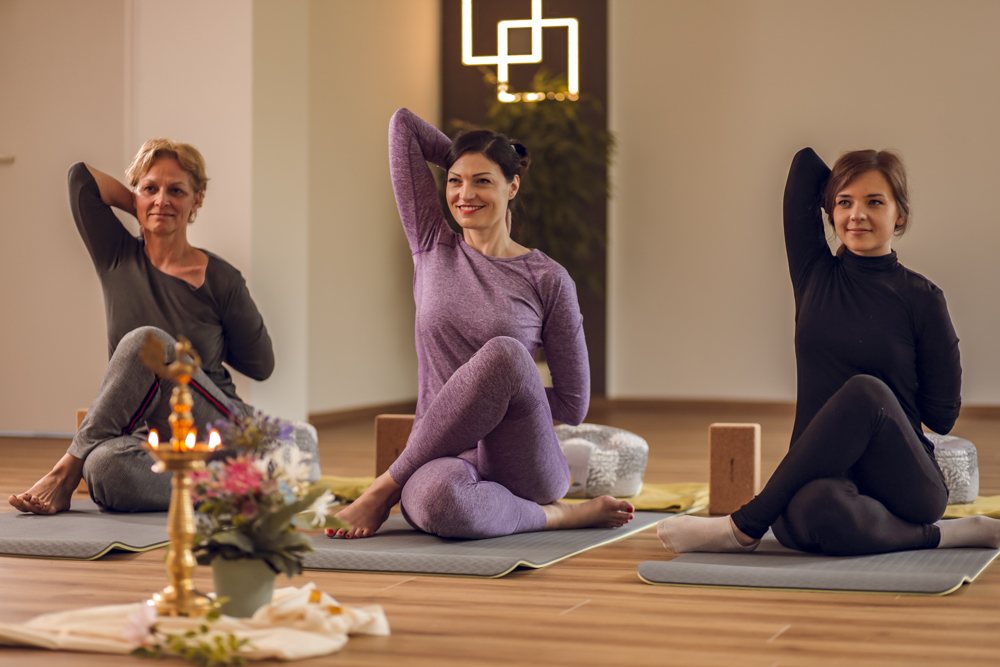
- As part of Bad Kissingen's Ayurvedic concept, daily yoga sessions are held (350 days a year). Furthermore, group meditation and mantra chanting sessions take place twice a week.
- The qualified Ayurvedic chefs at Fontana Hotel prepare delicious vegetarian dishes daily for the patients and guests of the Ayurveda Clinic.
Ayurvedic treatment at the Bad Kissingen clinic
Ayurveda has been the traditional medical system of India for over 5000 years. It considers people as a whole, their physical and mental state, as well as their social environment. Ayurveda has proven effective for many chronic diseases and has been recognised by the WHO as a natural method of treatment.
- After thorough diagnosis, an examination of the eyes (iris), pulse, and tongue, as well as based on the information from your questionnaire, the doctor determines the treatment plan.
- The effectiveness of the treatment is assessed during daily consultations with the doctor and adjusted if necessary.
- The therapy includes massage, steam baths, inhalation, detoxification, and herbal infusions.
- During Ayurvedic treatment, diet is an integral part. Indian vegetarian cuisine helps to cleanse the body and remove accumulated toxins.
- Daily yoga sessions under the guidance of an experienced instructor, chanting mantras twice a week and regular meditation complement the therapeutic programme. Private yoga sessions can be booked upon request.
Treatment methods
Many chronic illnesses respond well to Ayurvedic medicine. In particular, these include:
- Type 2 diabetes and obesity – as well as their prevention to avoid secondary diseases such as polyneuropathy, rheumatism, fibromyalgia, and arthritis.
- Pain syndromes — including all types of headaches and migraines.
- Back pain is treated with Marma therapy by affecting 107 physiological points.
- Skin diseases, such as eczema, neurodermatitis and psoriasis, are treated using medicinal milk, cooling buttermilk or warm oil baths.
- Neurological illnesses and paralyses – for example, burnout, exhaustion, and post-stroke depression.
- Digestive system disorders and bowel irritation.
- Stress and sleep disorders – and their prevention.
- All complaints caused by overstimulation of the autonomic nervous system are treated with relaxing procedures, such as pouring warm oil on the forehead to relieve anxiety and discharge the nervous system.
- Ayurvedic diagnosis of illnesses and the prescription of treatment in accordance with one’s body constitution.
- Dietary nutrition is compiled individually for each patient.
- Individual yoga exercises, for example, for type II diabetes, to stimulate the pancreas.
- Personalised treatments for the entire body.
- Food supplements based on medicinal herbs.
- Possibly. Lifestyle advice and a doctor's recommendations for personal spiritual practice to cleanse the soul as the most important impulse, bringing peace and protection from harmful influences.
Yoga – Meditation – Ayurveda
Ayurveda, yoga and meditation are cornerstones of longevity, which are rooted in Vedic sciences that have been used for millennia to heal the body, enhance mindfulness, and purify the consciousness. While Ayurveda is more concerned with a person's physical state, yoga strengthens the body and mind, and meditation purifies the consciousness. In practice, they complement each other.
In yoga, the emphasis is placed on a person's own activity, which is enhanced through physical exercises (asanas) and breathing exercises (pranayama). The practitioner develops the ability to control their consciousness. And in connection with meditation, they come to understand themselves and the surrounding world.
There are countless forms of meditation: from dynamic or dance meditation to sitting quietly in front of a white wall. Everyone will be able to find a suitable form for themselves.
Both Ayurveda and Yoga view our consciousness as the main force in life, controlling everything and decisively determining how we shape our existence.
Nutrition
Diet plays an important role in Ayurvedic medicine. Guests at the clinic are provided with three meals a day. All meals are freshly prepared and served individually in accordance with the doctor’s instructions.
We adhere to the old saying: "Let food be thy medicine, and medicine be thy food." Diet plays a crucial role in Ayurveda and, therefore, is a very important component of Ayurvedic medicine. Whatever food we eat every day, be it a schnitzel or a cream cake, our body turns it all into its own new cells.
Dietary recommendations according to Dosha type
Ayurveda distinguishes between three main types of human constitution (doshas): Vata, Pitta and Kapha. Each of the doshas requires a diet that corresponds to it. Much can be achieved simply by following a few basic dietary rules and using spices appropriate to your dosha.
Most people have mixed doshas of two main types. A person is healthy when the dosha energies are balanced; they then live a full life with mobile joints and a healthy heart. If a dosha is "imbalanced," it can be rebalanced through appropriate nutrition and treatment.
- Vata symbolises the element of air and movement. Vata people are fast, intelligent, and flighty. They must always eat only hot or warm food.
- Pitta symbolises fire, energy, and drive, and has a tendency to quickly become enthusiastic about an idea. People with Pitta should avoid eating excessively spicy food.
- Kapha is the earth element; people of this type are loyal, reliable, and prone to obesity. It is not recommended for people of this type to eat sweets or foods high in carbohydrates.
The main rules of Ayurvedic nutrition
- You should eat hot food as often as possible, as it is easier to digest. Never drink cold beverages (as is common here) during meals; it's better to replace them with hot water or herbal tea.
- Always start your meal with a small starter (e.g. a date, a fig or a teaspoon of honey) to signal your stomach and stimulate digestive juices.
- Breakfast: Start your day with warm porridge made with water or coconut milk (cow's milk is also fine if you prefer), but never with fresh fruit – for example, oranges in milk porridge can cause fermentation in your stomach. Suitable additions to porridge include nuts, dried figs, raisins, dates, coconut, as well as cinnamon, cardamom, or honey. Light pancakes with jam, hearty mushroom ragout, or fried bananas are also suitable for breakfast. (If fried in oil, never mix with coconut flakes!)
- Lunch: This should be the most filling meal, with a high carbohydrate content (potatoes, rice, noodles), a salad with a good dressing, stew, braised or boiled vegetables (all types of cabbage, courgettes, aubergines, pumpkin, carrots, etc., various spices and flatbread). Legumes are a good source of protein.
- Dinner: The lightest meal – no salads or raw vegetables! The ideal choice would be soup or stewed vegetables with rice.
- Magical Indian ingredients recommended for consumption as often as possible include ginger, cardamom, garlic, turmeric, curcumin, black cumin oil, sesame oil…
What should be avoided
- Never mix different animal proteins – fish and meat together, like in paella. Proteins don't get along!
- Never mix eggs with meat or fish.
- Never mix milk proteins with acidic fruits, for example a strawberry milkshake.
You can find more information on these topics by attending the weekly lectures at the Bad Kissingen Clinic.
Since each body type (dosha) has its own specific metabolism, it is wise to seek advice from an Ayurveda specialist and adjust your diet accordingly. This way, you can avoid the accumulation of too many toxins in your body. Nevertheless, it is beneficial for everyone to undergo an annual cleanse or detoxification to maintain health and restore energy. In Ayurveda, this process is called Panchakarma.
Medicines
Popular Indian spices such as turmeric, cinnamon and cardamom, as well as many tropical herbs and plants, along with minerals, are used in Ayurveda as medicinal food supplements. Such natural remedies are prepared exclusively according to ancient recipes of traditional Ayurveda. No chemical preparations are used in traditional medicine.
Ayurvedic oils
The oils used in the Bad Kissingen clinic for their famous oil massages and the "Shirodhara" treatment are prescribed individually, according to the Dosha type.
All oils are produced in India solely from natural ingredients, and are then delivered to the clinic in Germany.