
Ayurveda · India
Tours to Kerala: Ayurveda and Panchakarma
A tour to Kerala means a deep, authentic Panchakarma course with doctors from the family vaidya schools. The humid tropical monsoon climate opens the pores and strengthens the effect of the oil treatments — which is why a course here is traditionally considered the most effective. We select the clinic to match your goal and accompany you throughout the trip.
Find a clinic Read client reviews →
since 2015
year
1,000+
clients
50+
clinics
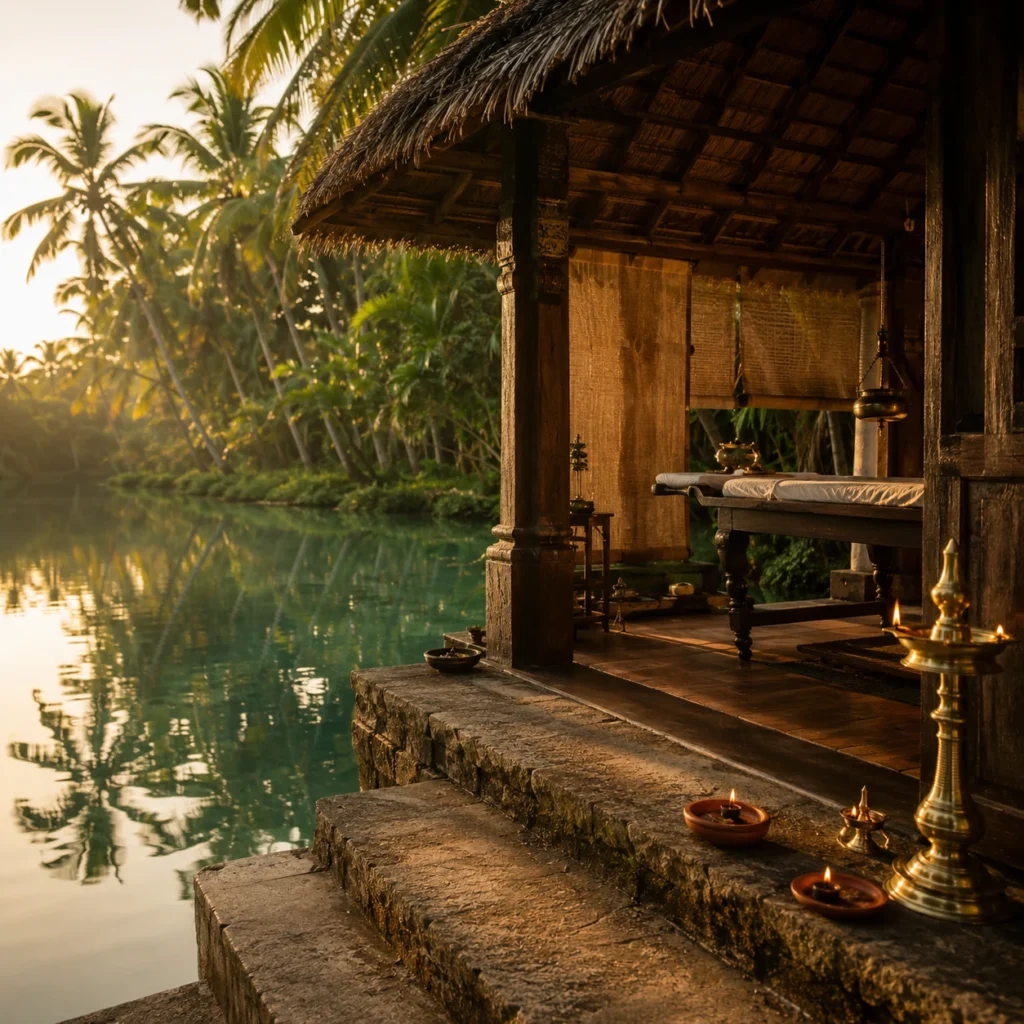
Vetted Ayurveda and Panchakarma clinics in Kerala
Programmes in Kerala — from 60 € per dayThe final cost depends on the clinic, the programme and the season


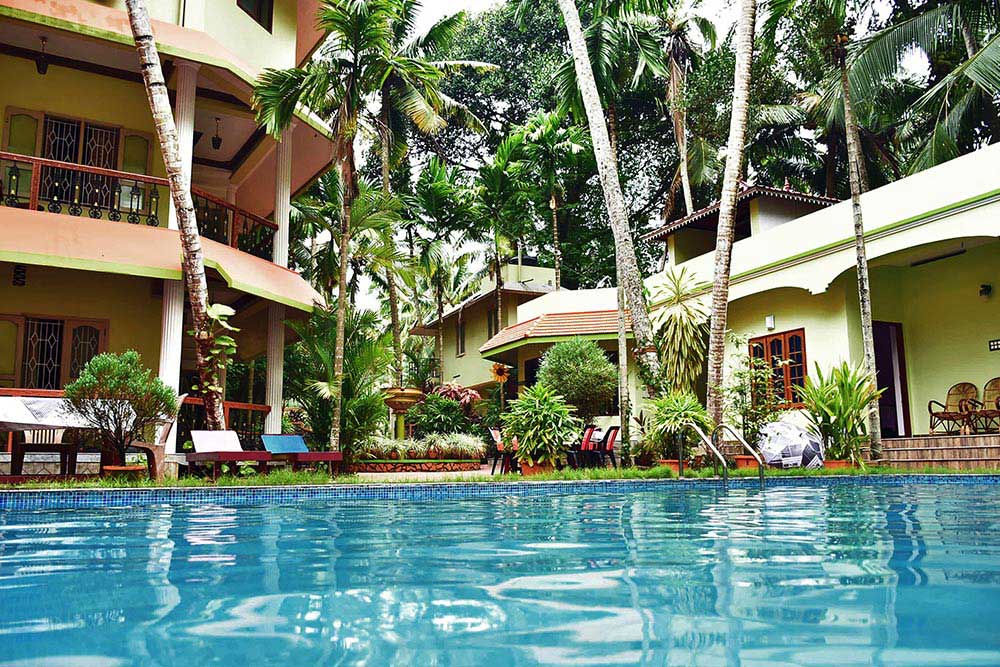

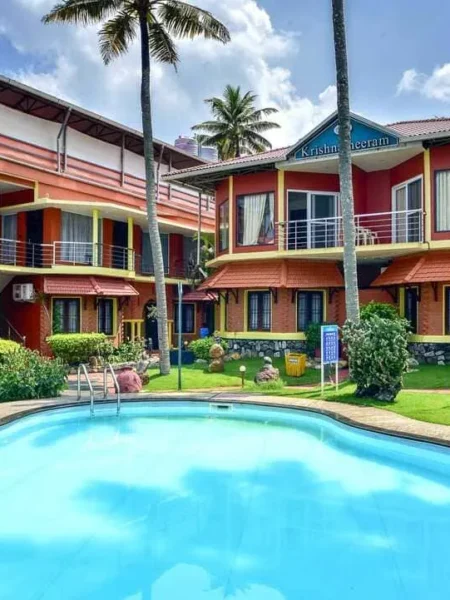


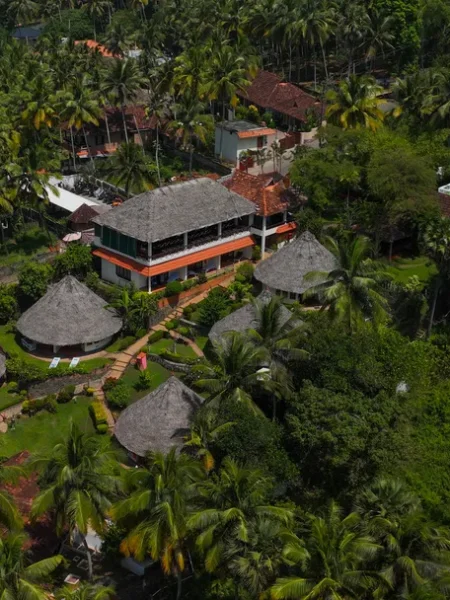

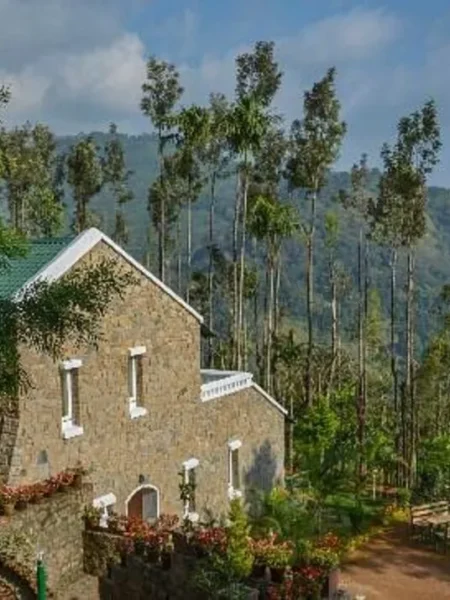


−10%
Sale

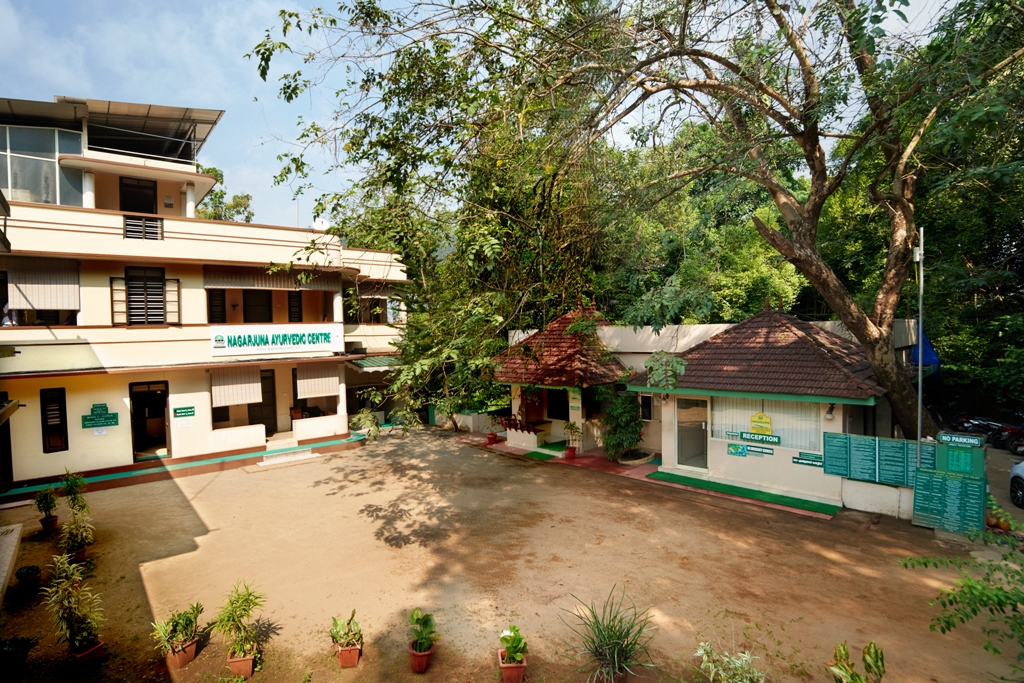
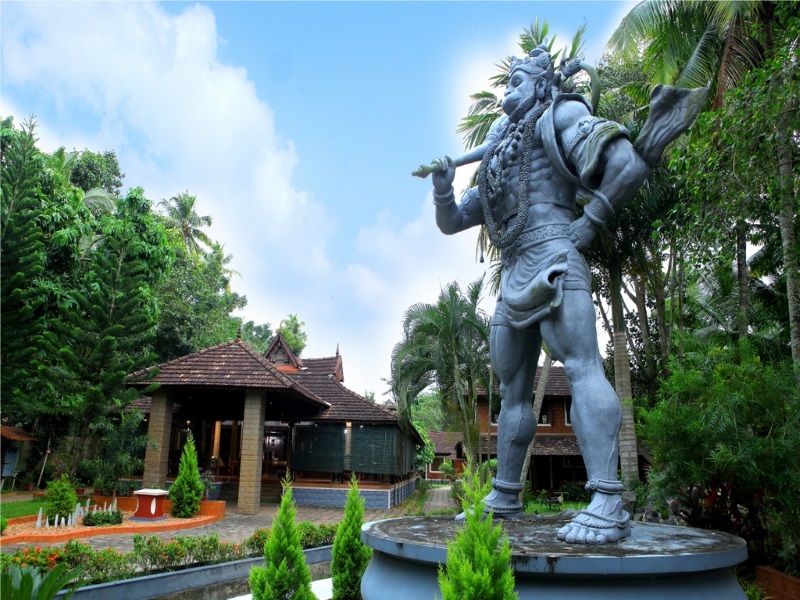
Ayurveda at the Nagarjuna Centre
Kaladi, Kerala


Sale
−15%
Sale


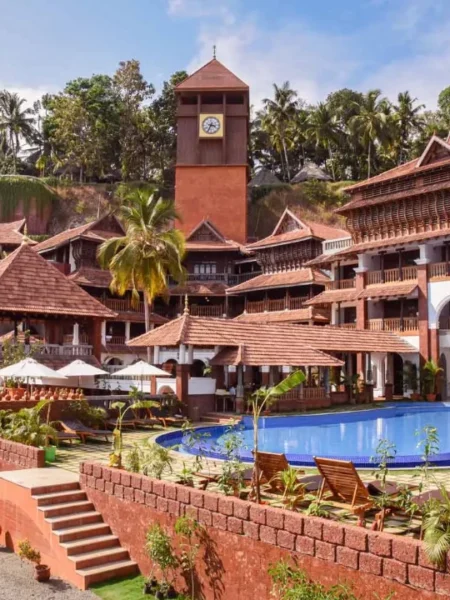

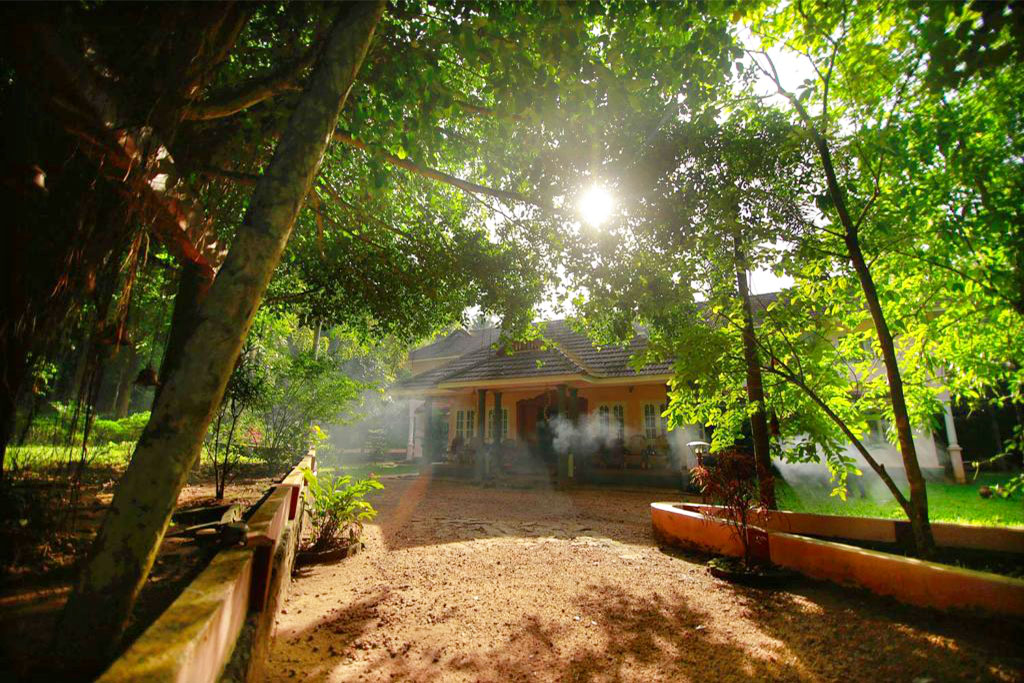
Vedasudha Ayurvedic Clinic
Kottayam, Kerala

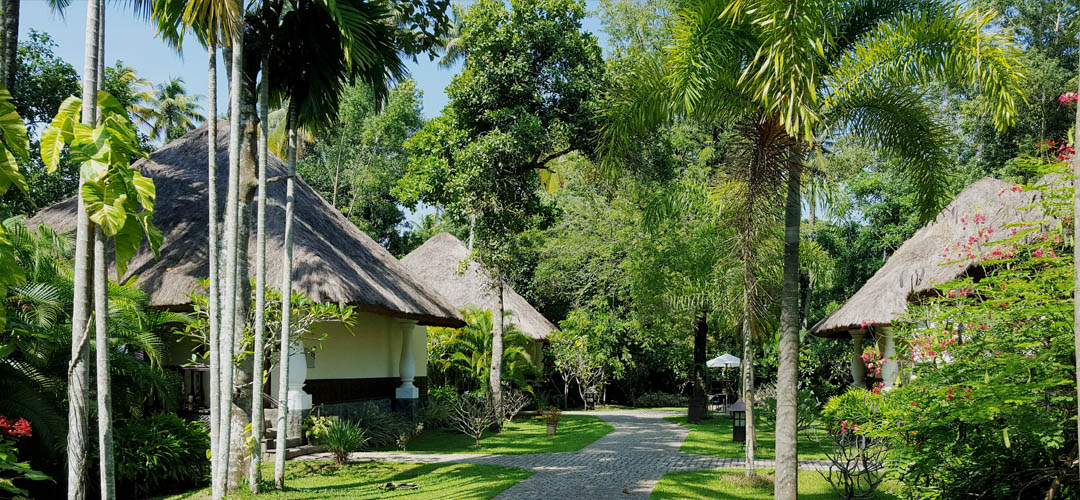
Yogasudha Ayurvedic Clinic
Pinnakkanadu, Kerala

−10%
Rajah Beach Ayurvedic Clinic
Guruvayoor, Kerala

−10%
Rajah Eco Beach Ayurvedic Hospital
Guruvayoor, Kerala

−10%
Rajah Island Clinic
Guruvayoor, Kerala

−10%
What sets Ayurveda in Kerala apart
Authentic clinics
Family Ayurvedic dynasties in the vaidya tradition. Knowledge is handed down from generation to generation, with a strict medical approach and classical Panchakarma protocols under the supervision of doctors with many years of practice.
Ayurvedic centres
Specialised medical centres with state accreditation. A full Panchakarma course with diagnosis according to the canons of the Charaka Samhita and an individual treatment protocol.
Premium resorts
An Ayurveda programme based at coastal resort hotels. Treatment combined with comfort, quiet rest and the tropical nature of Kerala.
Kerala is a state in the south-west of India and the historical home of classical Ayurveda. This is why Panchakarma in Kerala is often called the most authentic in the country: the continuity of the family vaidya schools has been preserved here, and the format of treatment has been refined over centuries. Some Keralan clinics are centres of both Ayurveda and yoga, where the therapeutic course is complemented by meditation and breathing practices.
Frequently asked questions
Kerala’s climate allows you to take a course all year round — a unique advantage of the region. In the canons of Ayurveda the traditional time for deep Panchakarma is the monsoon season (June–September): warm, humid air opens the pores and activates the metabolic processes, which strengthens the effect of the oil treatments. This period has further advantages: fewer international guests, lower occupancy at the clinics (the doctor gives each guest more time), and seasonal discounts at many centres.
There are several airports in and near Kerala: Kochi (COK), Thiruvananthapuram (TRV), Kannur (CNN), Kozhikode (CCJ) and Coimbatore (CJB — technically in neighbouring Tamil Nadu, but convenient for the southern mountain centres). Which one suits you depends on where the clinic is: for the coast south of Kochi it is Thiruvananthapuram, for Wayanad it is Kannur or Kozhikode, for Munnar it is Coimbatore or Kochi. The recommended airport and the travel time are given for every clinic in the catalogue.
It begins with a detailed consultation with the doctor: medical history, background, current complaints, an assessment of your constitution and of any present imbalances. Some clinics additionally perform nadi pariksha (pulse diagnosis — the doctor reads three levels of pulsation corresponding to the three doshas of the body: vata, pitta and kapha) or ashtasthana pariksha (assessment at eight points). Based on the diagnosis, an individual protocol is drawn up for every day of the course — procedures, medications, diet and daily routine. As the course goes on, the doctor watches how the body responds and adjusts the programme.
The standard is 21 days. This is the norm for classical Panchakarma: in that time the body goes through three phases — preparation, the main cleansing procedures, and a gradual exit with recovery. The timing is flexible. People come for 7-14 days for light cleansing, to get to know the method, or for maintenance sessions. For deep work with chronic conditions it is 28–35 days or more. The minimum the clinics accept is 7 days, but the doctors say plainly that the effect will then be superficial.
Besides the five main Panchakarma procedures (vamana, virechana, basti, nasya, raktamokshana), the standard accompaniment to a course is abhyanga — a synchronised massage with herbal oils performed by two to four hands. Where indicated, the following are added: shirodhara (a warm stream of oil poured over the forehead), kati basti and griva basti (herbal oil baths for the lower back and the neck), potali massage (massage with warm herbal pouches), navarakizhi (massage with pouches of boiled rice, milk and herbs), facial treatments (mukhalepa, nalpamaradi) and specialised therapy for women’s health. The doctor decides the composition on the basis of the diagnosis.
Vegetarian Ayurvedic cuisine. The arrangement depends on the clinic: some offer a buffet with an Ayurvedic selection, some a standard menu for all guests, and in a number of clinics the doctor chooses the food individually to suit your constitution and condition. A typical day: porridge and light drinks in the morning, lunch as the main meal with rice, vegetables and dal, and a light, early dinner. Coconut oil is used a great deal and water is drunk warm. Meat, fish, eggs, coffee and alcohol are excluded — that is part of the therapy. When booking, we check the meal arrangement at the clinic you have chosen.
As a rough guide, based on the clinics in our catalogue: from 50 € per day in the economy options up to 460 € in premium clinics; the middle range is roughly 100–190 € per day. The price usually already includes accommodation, Ayurvedic meals, daily procedures and medical supervision. The final sum depends on the clinic you choose and the length of the programme (the standard course is 21 days).
How we help with the trip
For a trip to Kerala a tourist e-Visa, a regular tourist visa or an AYUSH visa are all suitable. We accompany the whole process: choosing the clinic, booking the programme, arranging the visa, help with documents and advice on flights to the nearest airport.