
Sale
The Napier Museum of Art and Natural History is located in Trivandrum, the capital of the state of Kerala. It is one of the country’s first collections of artistic treasures, founded by the Maharaja of Travancore. The first museum building was erected in 1855, but two decades later it was demolished — the collection was growing fast and there was no longer enough room. The building that exists today was designed by the English architect Robert Chisholm; the museum opened in 1880 and was named after Lord Napier, the then Governor of Madras.
The museum complex comprises the museum building itself, the surrounding park with a zoo, and the Sri Chitra Art Gallery. The gallery’s collection includes works by the great Russian painter and traveller Nicholas Roerich, but most of all it takes pride in the paintings of two outstanding Indian artists — Raja Ravi Varma and Raja Raja Varma.
Those interested in the history and everyday life of India will certainly not feel that a tour of the Napier Museum was time wasted. Children will happily admire the «living collection» of the zoo, and lovers of nature will appreciate the magnificent park with exotic plants. It is one of the townspeople’s favourite places to relax.

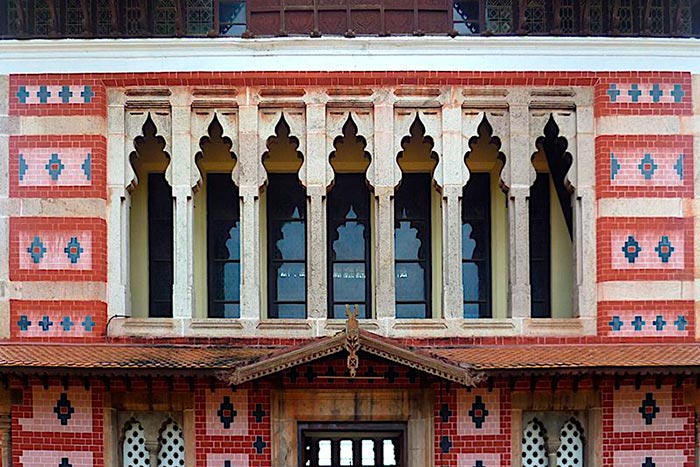

The architecture of the Napier building is unique: it is a mixture of severe Gothic and intricate Oriental style, an example of the so-called Indo-Saracenic architecture. The double walls provided natural cooling of the air back in the days when no one had heard of air conditioners. The windows not only let light and air inside but also serve as a magnificent decoration. A row of graceful window openings on the façade makes the appearance of the building lighter and more airy, and the bay windows resemble a carved jewellery box.
The long narrow windows under the roof flood the halls with soft diffused light, visually raise the ceiling and draw attention to the decorative carving on the wooden beams. The fine work of the carvers is hard to make out in detail, but even what is accessible to the eye impresses with its scope and elegance.
The Napier Museum brings together works by well-known artists and sculptors and items of folk craft. Here there are majestic sculptures with fine carving and simple household utensils of past centuries. Astonishing bronze statues stand alongside musical instruments, costumes for ritual dances, temple chariots, and carvings in wood and ivory. A separate hall is given over to archaeological antiquities and historical artefacts.
Among the exhibits are a rare old metal statue of the god Vishnu and the legendary sword of one of the first Indian fighters for freedom against the British colonisers.
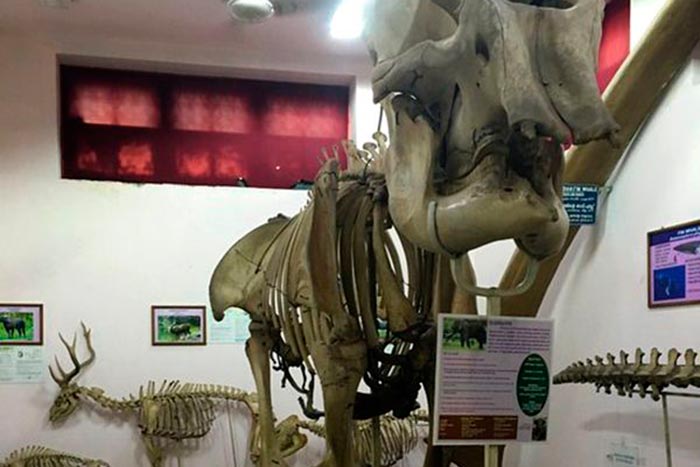
In the natural history department fragments of bones and whole skeletons of long-extinct and still-living animals are gathered. The collection of skulls of hoofed animals with mighty horns and the skilfully made stuffed lions, tigers and leopards are impressive.
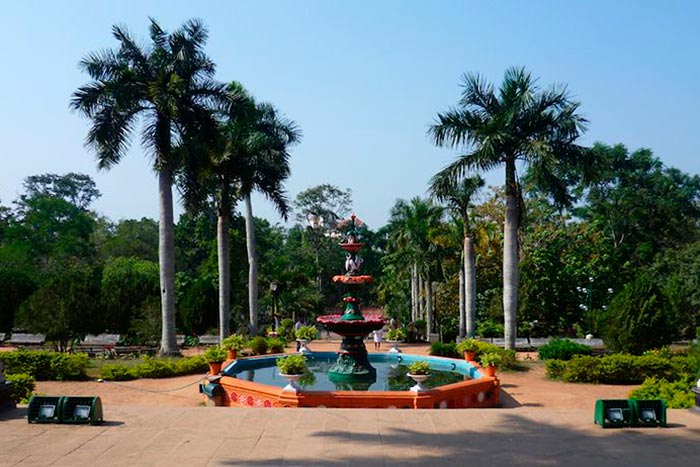
The park surrounding the Napier building is itself a collection of rarities. Some of the plants are found only in this locality, some were brought from Europe, and there are even «guests» from the tropics of America and Africa.
Here grow the red sealing-wax («lipstick») palm, the «traveller’s tree», in whose leaves water collects, and the «pagoda tree». It is pointless to describe the beauty of the local flowers — no words can convey their delicate fragrance, subtle shades and the freshness of the bright greenery. And those whom botany does not fascinate will simply enjoy sitting in the shade of the avenues and admiring a fountain or a gazebo.
Trivandrum is the capital of Kerala: a visit to the museums can be combined with wellness — Ayurveda in Kerala.
Thank you! Your review will appear on the site after moderation.
Thank you! Your review is now live on the site.
Submit a request – our specialist will contact you and help you choose a programme and clinic to suit your request and budget.
Thank you, we have received your request. Our specialist will contact you shortly to clarify your requirements and assist you with your selection.