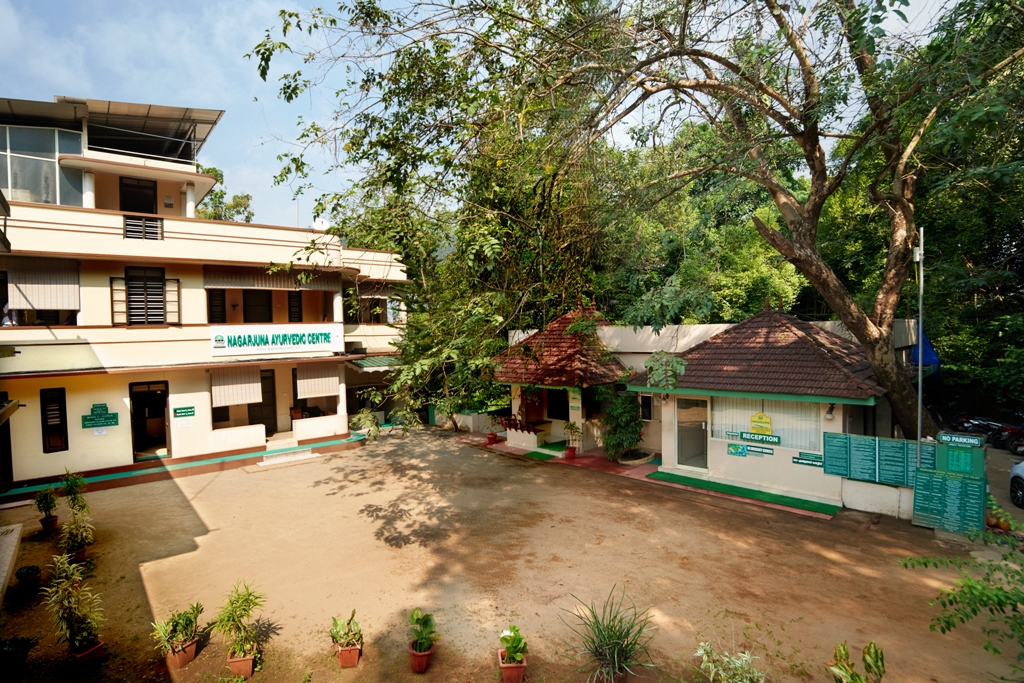
Ayurveda at the Nagarjuna Centre
Kaladi, Kerala
Sringeri is a small Indian town with a single main street leading to the Sringeri Mutt temple complex. It is located in the south-west of India, in the state of Karnataka. On the banks of a river winding between the foothills of the Western Ghats are scattered temples of astonishing beauty, resembling petrified lace. There is an ashram here, where pilgrims and travellers find shelter, as well as many cafés and souvenir shops.
Translated from Sanskrit, «matha» (mata) means a monastery, an educational institution. The first Hindu monasteries appeared as early as several centuries BC, but these secluded abodes of sages became widespread only in the second half of the first millennium.
Sringeri Sharada is one of the first monasteries in which one of the schools of Hindu philosophy — Advaita Vedanta — was studied and developed. The shrine owes its founding to the famous sage Adi Shankara, who lived in the 8th century. He gathered scattered theological sources, systematised the knowledge kept in them and left numerous commentaries on the Vedas.
There is a legend about why the sage chose this very place. Once, on the bank of the river, Shankara saw a cobra, spreading its hood, shielding from the burning sun’s rays a frog laying eggs. The sage decided that a place where even eternal enemies had managed to overcome their instincts was bright and pious. Here Shankara founded a temple in honour of Sharada, the goddess of wisdom. Besides it, on the grounds there is the ancient majestic shrine of Vidyashankara and several more small temples.
The entrance to the temple area is adorned by a gate tower almost forty metres high. The multicoloured tiers, gradually narrowing, strive upwards, and each is decorated with brightly painted sculptures, columns and friezes. The construction of this monumental tower was completed quite recently — in 2014.
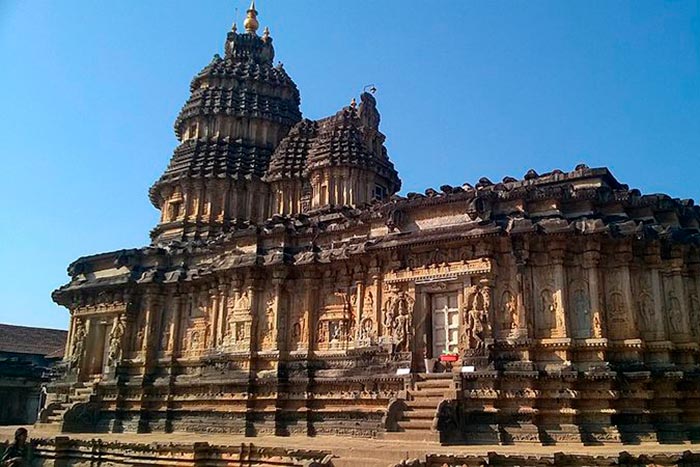
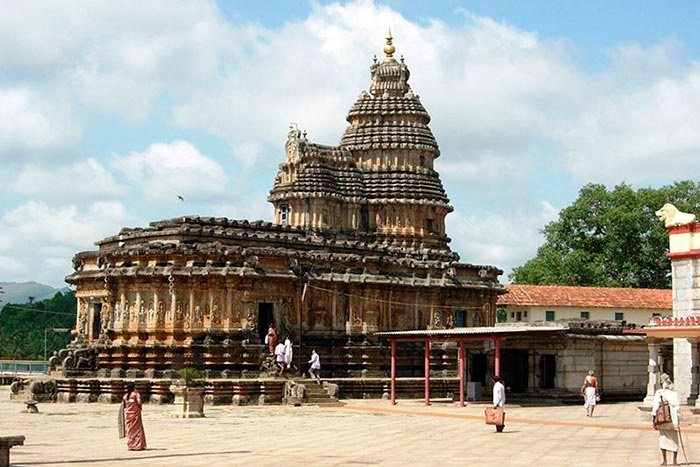
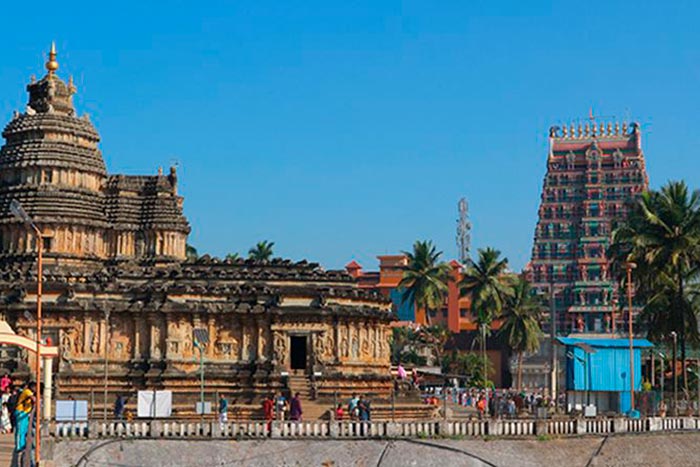

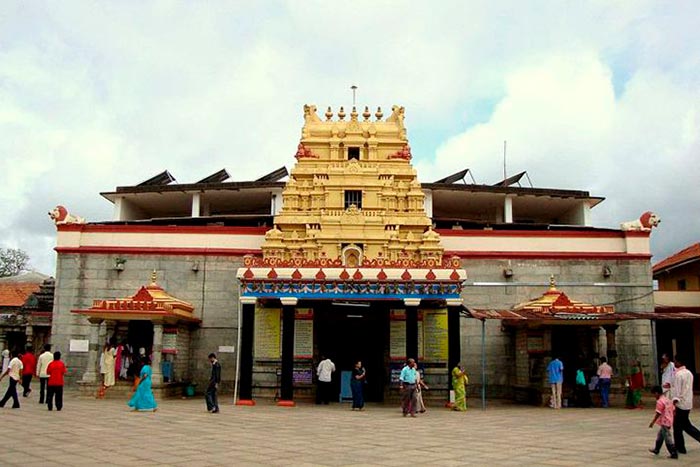
Sri Sharada is a large functioning temple and a place of pilgrimage. The shrine is carefully looked after: it is renovated, something is being added and rebuilt, so the interior décor is a motley mixture of ancient work and later renovations. In the mandapa — an open hall with a colonnade — white stone columns rise in two rows with carved images of divine guardians and mythical creatures.
The path for the parikrama — the ritual circumambulation around the shrine accompanied by prayers — is rather austere. But the altar wall gleams with golden ornaments, and the floor is painted with patterns believed to bring happiness. The gate tower here is not tall and has apparently hardly undergone alterations.
The ancient structure (1338) stands on the bank of the Tunga River, beside a bridge to the opposite shore. The temple is decorated with countless columns, carved images of deities and openwork friezes; on the outer walls there is literally no space free of carving. The building is crowned by a dome of astonishing beauty with a golden spire. The shrine resembles an unshakeable granite cliff against which the waves of time have beaten powerlessly for centuries.
From the stepped platform of the base grows a whole forest of columns, divided by six entrances. Each porch is guarded by dvarapalas — stone images of gatekeepers. Usually such sculptures are made identical, in the form of armed warriors, demons or giants, but here the statues are different. Some clutch traditional Indian tridents, others beat ritual drums, and still others hold sacred symbols of Hinduism — giant conch shells decorated with carving. Along the carved friezes elephants and lions stride majestically, with sculptural groups of deities placed between them.
The temple is small and very ancient, and inside it is decorated with carved columns of astonishing beauty. Its intimacy and serenity are emphasised by religious chants sounding from unobtrusive loudspeakers: worshippers sing hymns in honour of the gods, and sometimes one of the clergy recites ancient texts and mantras in Sanskrit.
Sringeri is located in Karnataka — another region with a strong tradition of Ayurveda: Ayurveda in Karnataka.
Kaladi, Kerala
Thank you! Your review will appear on the site after moderation.
Thank you! Your review is now live on the site.
Submit a request – our specialist will contact you and help you choose a programme and clinic to suit your request and budget.
Thank you, we have received your request. Our specialist will contact you shortly to clarify your requirements and assist you with your selection.