The Karamana River
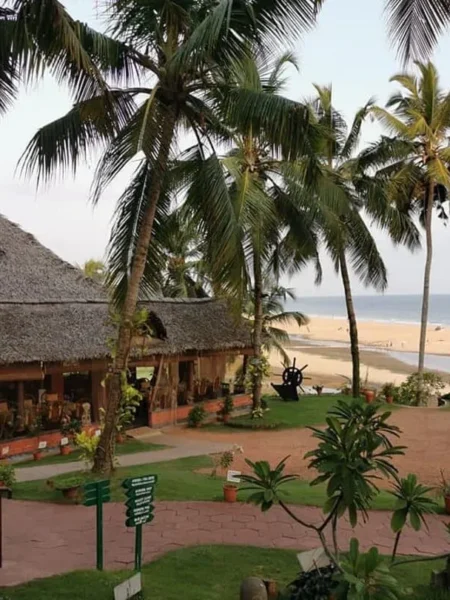
The Karamana River begins its unhurried course towards the ocean on the slopes of the Western Ghats. Dammed by two barrages, it is not very long — only 68 kilometres. Closer to its mouth the Karamana flows through the territory of Trivandrum, the capital of the state of Kerala, while in its upper reaches its banks are covered with dense thickets of tropical plants.
A journey on a houseboat
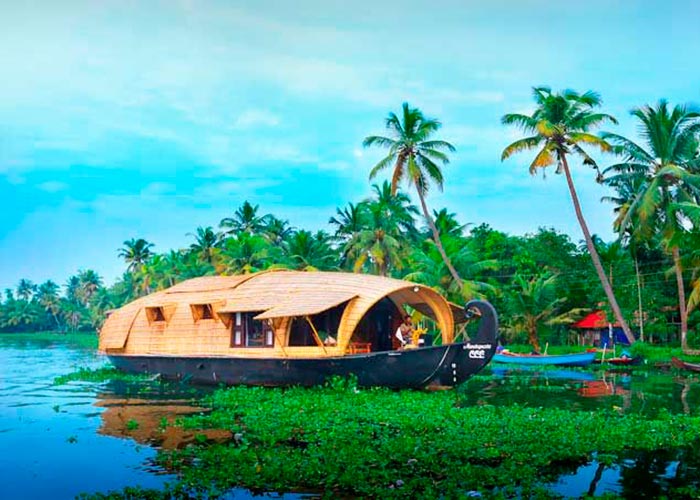
A water system stretches across the state of Kerala, connecting countless rivers, lakes and quiet backwaters; the Karamana is part of it too. You can travel along this waterway in comfort — on a vessel resembling a small floating house. Travellers await the lush greenery of trees and shrubs, bright flowers, slender palms, unusual birds and magnificent sunsets and sunrises.
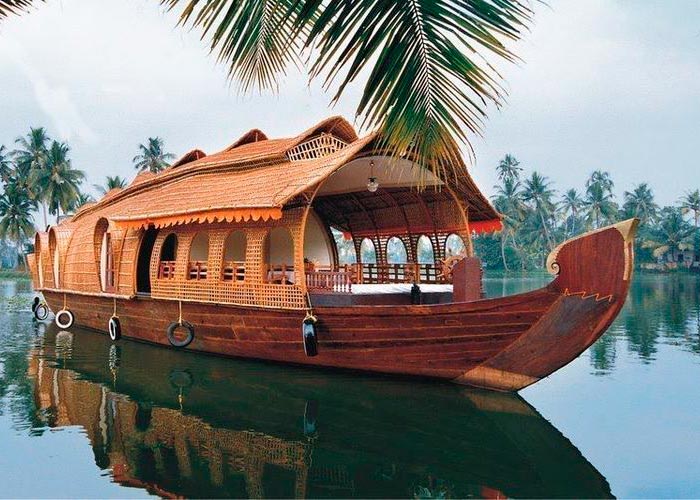
A kettuvallam — as this traditional Indian vessel is called — consists of a wooden hull under a thatched roof. It was precisely on such little vessels that in the old days spices, ivory, sandalwood and other cargoes were carried to the port of Cochin. The craftsmen to this day adhere to traditional building methods and use the same natural materials.
Inside, the houseboat usually consists of two bedrooms, bathrooms and a mini-kitchen. On the deck and in the open lounge there are comfortable armchairs and sofas. You can hire not only a crew but also a personal cook who will prepare traditional Indian dishes.
Photos of the Karamana River


What to see on a journey along the Karamana River
On the bank of the Karamana stands one of the oldest temples of South India — Thiruvallam. The shrine, about two thousand years old, is included in the list of monuments of national importance. On days of remembrance the faithful pay honour here to the souls of their ancestors and then perform a ritual ablution.
In its lower reaches the river passes through a district of Trivandrum named in its honour. In the capital itself you can visit the observatory opened in 1837, the world-famous Sri Padmanabhaswamy Temple, the zoo, the East Fort, the park area, or simply admire the palaces and castles of the former rulers of these lands.
This is interesting. In the vaults of the Padmanabhaswamy Temple, opened by order of the authorities in 2011, tonnes of gold ornaments and statues, ancient coins and precious stones were discovered. By the most conservative estimates, the total value of the treasures found exceeds 20 billion dollars.
Trivandrum is located at the southern tip of mainland India, very close to the magnetic equator. In the village of Thumba, not far from the capital, is the Equatorial Rocket Launching Station, which began operating in 1963.
A season convenient for travel
Kerala is squeezed between the Laccadive Sea and the mountain ranges of the Western Ghats. The high ridges shield the coast from the cold winds blowing from the mainland, but they also stop the monsoons coming from the ocean and make them pour down as rain over the whole territory of the state.
During the monsoon season strong winds, storms and sometimes hurricanes are a common occurrence. In June the tourist places practically die out: some souvenir shops and small eateries close until winter. The only plus is that the prices for renting accommodation drop noticeably.
Closer to the end of autumn the tourist service gradually comes to life, but at this time it still sometimes rains and storms come down on the beaches. Spring in Kerala is the hottest season, and travellers, like migratory birds, scatter to their homes until the next winter. It is safest to travel along the Karamana in the middle of winter: this is a time of pleasant dry weather without intense heat and prolonged downpours, of a calm sea — and of the highest prices.
Interesting places located in this region
Kerala is famous not only for its nature but also for Ayurveda: Panchakarma in Kerala — a reason to linger in these parts longer.