Aruvikkara Dam
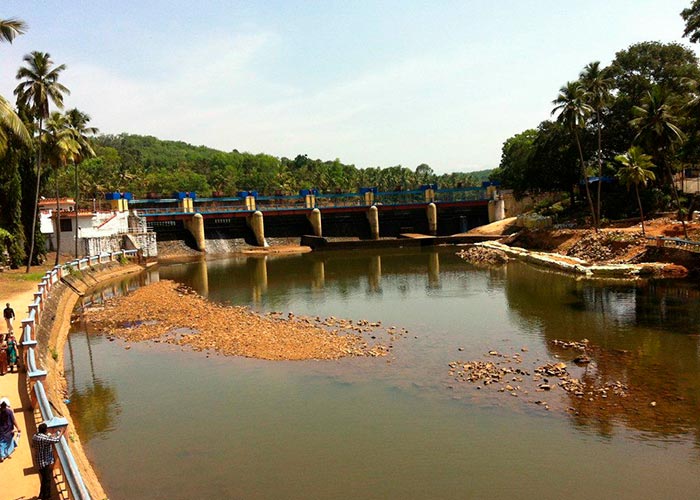
The Aruvikkara Dam is the older of the two dams on the Karamana River. It was built in the thirties of the last century and is located not far from Trivandrum, the capital of the Indian state of Kerala. The beauty of the landscapes surrounding the river gave the Karamana another, poetic name — Vanamala. In Sanskrit this means «a garland of forest»; so was one of the rivers called in the sacred Hindu texts.
«A garland of forest»
Amid the dense tropical greenery winds the shining ribbon of the Karamana River. It begins its way to the ocean on the spurs of the Western Ghats, at an altitude of about 1600 m above sea level, and closer to its mouth it crosses the capital of the state of Kerala, famous for its resorts and Ayurvedic clinics.
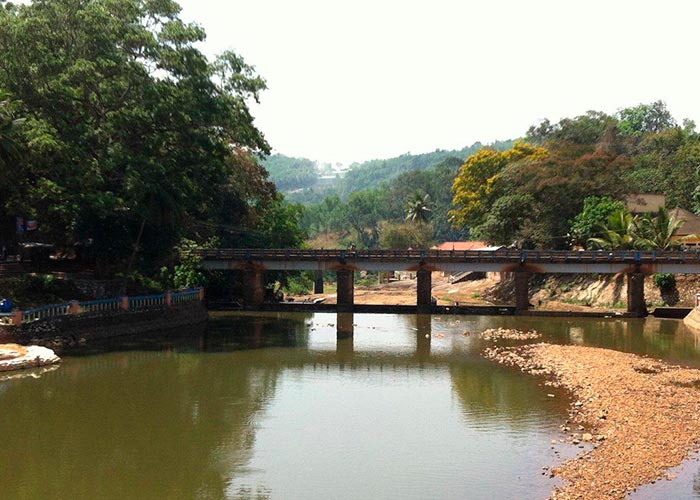
From the foothills to the coast the river covers almost 70 kilometres of nature untouched by man, and on this comparatively short stretch two dams fit. Several bridges are thrown across the Karamana, the most significant of which was built in the times of English colonisation, in 1853.
The greatness of the river has for more than a century been sung by singers and musicians. One of the rulers of the former principality of Travancore was a talented composer and dedicated several of his works to the Karamana, and among his court musicians there were many natives of the village of the same name on the bank of the river.
Photos of the Aruvikkara Dam

What work the Aruvikkara Dam does
The Aruvikkara Dam was built to supply Trivandrum with drinking water, and the city pumping station erected in 1933 is still in service. The Peppara Dam, located higher up the river, came into operation in 1983: it regulates the flow of water coming from the upper tributaries to Aruvikkara. This made it possible to reduce the danger of the destructive floods for which the Karamana was famous in former years.
Sights and places of rest
Right opposite the dam, on a rock by the bank of the Karamana, stands the ancient temple of the goddess Durga — Aruvikkara Bhagavathi. It is famous first of all for its pond with sacred fish: pilgrims feed the large fish, regarding this as an offering to the deity.
Nearby, on the territory of Trivandrum, there are several more ancient majestic temples, and a little downstream stretches the resort of Kovalam, famous for its sandy beaches.
You can see these sights and admire the wild tropical nature from aboard a kettuvallam — a small floating house, a traditional Indian vessel. Its wooden hull with a woven thatched roof conceals several comfortable bedrooms, a bathroom and a mini-kitchen, while the open observation deck and the lounge are fitted with comfortable sofas and armchairs. On such a vessel one can spend several days in comfort; usually tourists hire the houseboat together with the service personnel — a crew and a personal cook.
A season convenient for travel
In the summer months monsoons descend on the state of Kerala. A sky covered with clouds and incessant downpours are hardly a pleasant backdrop for a journey along the river. In addition, the fiercest storms with hurricane winds often come: they hurl huge waves onto the beaches and raise the water level in the river. A trip in the period from late spring to early autumn will bring no pleasure — the only plus is that the prices for renting accommodation drop.
The tourist season begins closer to the end of November and lasts until mid-March. By this time resort life revives, and the restaurants and shops closed for the monsoon season open again. The most favourable and the most «expensive» season is December and January.
Interesting places located near the Aruvikkara Dam
- Lighthouse Beach
- Hava Beach
- Samudra Beach
- The Karamana River
- Halcyon Castle
- Sri Chitra Gallery
- Valiathura Pier
Information for tourists
The roads leading to the Aruvikkara Dam are kept in good condition. Nearby there is a café open until half past seven in the evening, a paid toilet and a free car park. The children’s park, unfortunately, has long been abandoned and is in a deplorable state.
A trip around the surroundings of Trivandrum is convenient to combine with recovery — a wellness tour to India combines excursions and wellness.