Procedures in Panchakarma
Panchakarma translates as «five actions» (pañca — five, karma — action) and is described in detail in the classical treatises of Ayurveda — the Charaka Samhita and the Sushruta Samhita. It is not a 3–7-day wellness programme but a full system of cleansing and restoration, which in the Ayurvedic tradition is carried out at a clinic and under the supervision of a vaidya (an Ayurvedic doctor).
Ayurveda is a traditional wellness system. Panchakarma procedures do not replace the treatment of specific illnesses: in chronic conditions they are undergone as a supplement and only after consulting a doctor. Below — how the course is arranged, which actions and procedures it includes and in which conditions they are traditionally applied.
Three stages of Panchakarma
A full Panchakarma is always three consecutive stages, not a single procedure.
1. Purvakarma — preparation. The aim — according to Ayurvedic ideas — is to liquefy the accumulated ama (undigested remnants) and gently move it from the tissues into the gastrointestinal tract. Without a proper Purvakarma the main procedures give no therapeutic effect. The main methods of preparation:
- Snehana — oiling. Internal (snehapana) — taking clarified ghee butter with herbs in individually increasing doses. External — oil procedures: abhyanga and Ayurvedic massage, Shirodhara, pizhichil, kati basti and others. More detail — in the material on oiling according to Ayurveda.
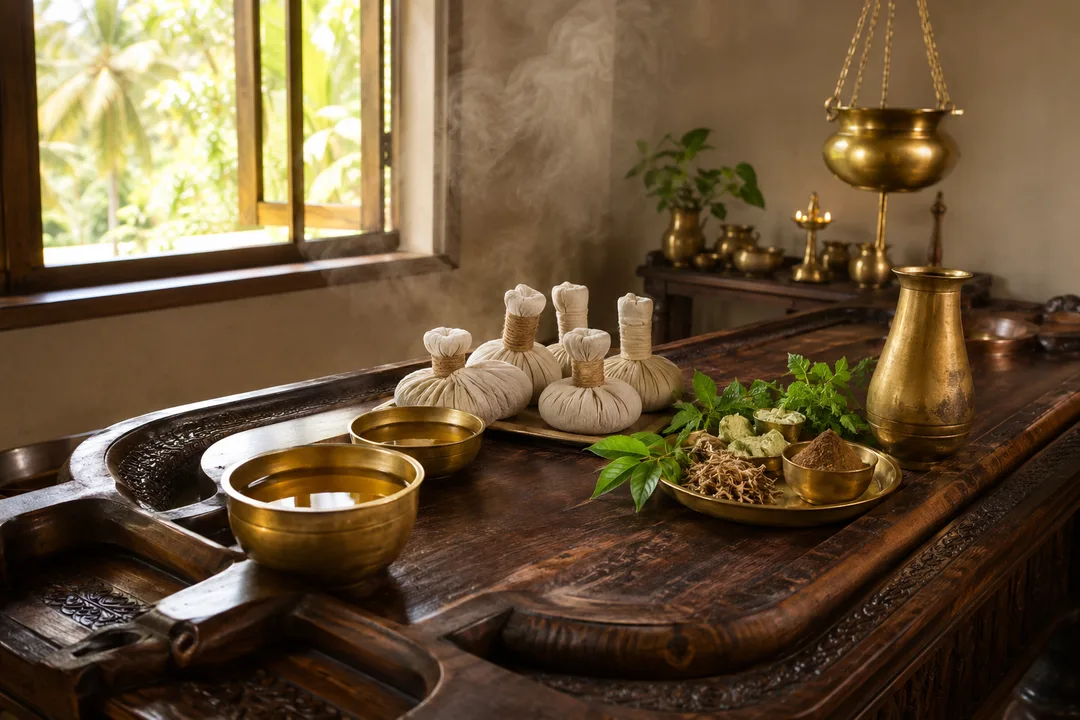
- Svedana — warming and steaming: steam procedures, herbal pouches (kizhi), nadi svedana. At this stage the ama, according to Ayurvedic ideas, is finally «softened» and prepared for elimination.
2. Pradhankarma — the main procedures. The central stage: the five classical cleansing actions. They are selected strictly individually and carried out only after preparation, under the control of a vaidya (see below).
3. Paschatkarma — restoration. Consolidating the result: a gradual return to ordinary eating, taking Rasayan (restorative preparations) and personal lifestyle recommendations for months ahead. It is this stage that makes it possible to preserve the effect of the course in the long term.
The five actions of Panchakarma
The «five actions» are the five classical cleansing procedures. Each of them in Ayurveda is traditionally related to one of the three doshas — vata, pitta or kapha (more about the doshas — in the materials What is Ayurveda and Principles of Ayurveda). All procedures are carried out by indication, individually and under a doctor’s supervision; the wording below describes the conditions in which they are traditionally applied in Ayurveda, not a guaranteed therapeutic effect.
- Vamana — cleansing of the upper gastrointestinal tract (balance of the kapha dosha), therapeutic vomiting induced by herbal preparations. Traditionally applied in: bronchial asthma, chronic bronchitis, sinusitis, allergic conditions, obesity, some metabolic and skin disorders.
- Virechana — cleansing of the gastrointestinal tract with individually selected laxatives of plant origin (balance of the pitta dosha). Traditionally applied in: skin conditions of the pitta type (psoriasis, eczema, acne), hyperacidity, disorders of the liver and gallbladder, migraines, gout.
- Basti — a therapeutic enema (oil-based anuvasana and decoction-based niruha), acts on the large intestine (balance of the vata dosha). Traditionally applied in: arthritis and diseases of the spine, chronic constipation, anxiety, insomnia, some forms of infertility.
- Raktamokshana — cleansing of the blood (most often leeches, jalauka), by strict indication. Traditionally applied in: persistent skin diseases, gout, venous disorders. (Carried out not in all clinics and not part of the standard programmes.)
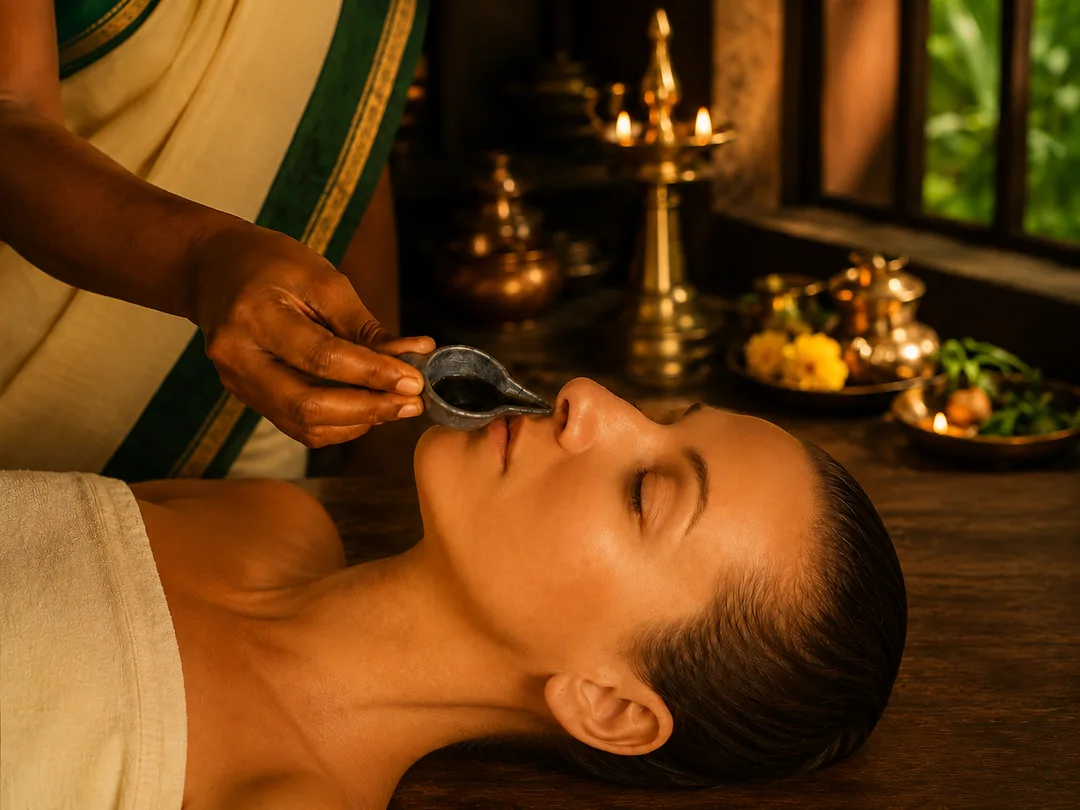
- Nasya — introduction of medicinal oils and formulations through the nose, cleansing of the head area. Traditionally applied in: chronic rhinitis and sinusitis, headaches and migraines, ringing in the ears, hair loss.
Accompanying and preparatory procedures
Besides the five main actions, the Panchakarma programme includes a wide range of oil, heat and massage procedures — they prepare the body for cleansing and consolidate the result. The set is selected individually to suit the programme and the person’s condition.
Ayurvedic medicine counts more than 20 different programmes; the length of a course is from 2 to 6 weeks. For a noticeable effect the length of a trip to India is usually no less than 2–3 weeks: an interrupted short course is not a full Panchakarma. During one visit to an Ayurvedic room 2–3 procedures are usually carried out, and a session lasts about an hour and a half. The rubbing-in of oil and therapeutic massages are often done «with four hands» (two therapists at once); procedures for men are carried out by male therapists, for women — by women.
Ayurvedic massages
Body massage. Relaxes, improves well-being and blood circulation, helps relieve fatigue and tension. The patient lies on a special wooden table, and the masseur works according to the principles of Ayurveda. The massage may be done once or as a course of 7–21 days by a doctor’s prescription; a session usually lasts about 50 minutes. More detail — Ayurvedic massage.
Head massage. A special massage of the head and scalp. Helps to relax, relieve tension, improves blood circulation; traditionally applied for headache and for hair care.
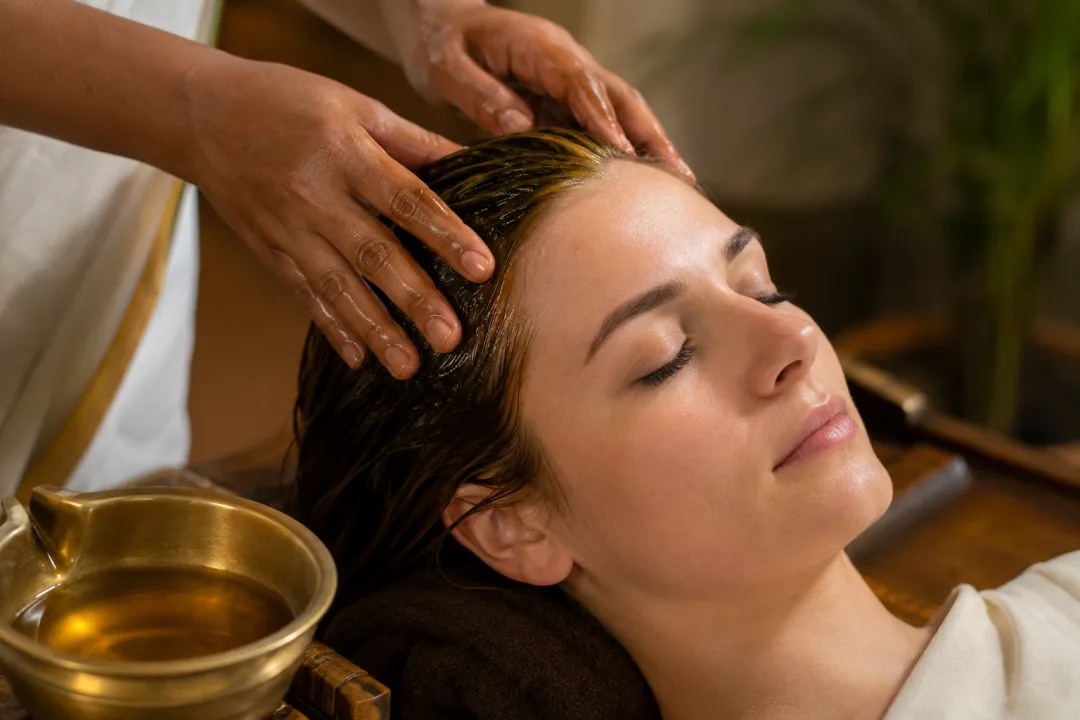
Abhyangam. A massage of the whole body with warm medicinal oils prepared according to the Ayurvedic texts. The oils nourish the skin and make it softer; the procedure helps to relax, relieve fatigue and tension, and improves blood circulation.
Roadstead (powder massage). A massage with a special herbal powder (kolakulathadi churnam, vara churnam) that is rubbed into the body with upward movements. Traditionally included in weight-loss programmes; applied for kapha disorders and for skin care.
Chavutti Thirummu (massage with the feet). The masseur works with the foot, holding on to a rope (dhanvantharam oil is used). Traditionally applied for back pain and stiffness.
Pouring
Shirodhara. Warm herbal oil (for example, Ksheerabala) is poured in a thin stream onto the forehead from a suspended vessel for about 30 minutes, the massage — about 15 minutes. Helps to relieve mental tension, relaxes, traditionally applied for insomnia and overwork.
Kshira Dhara. Warm medicinal milk with herbs (the herbs are selected to suit the condition) is poured onto the body or head. Traditionally applied for insomnia, mental tension, headaches and for skin care.
Pizhichil. One or two therapists rhythmically pour warm medicinal oil over the body for 45–60 minutes (an oil bath). Traditionally applied for stiffness of the joints, back pain, disorders of the nervous system; also prescribed as a restorative procedure.
Pouch massage
Njavarakizhi. A pouch massage with boiled njavara rice (boiled in milk): sweating is activated, the body warms up. Traditionally applied for joint pain and stiffness.
Look. A pouch massage with a medicinal powder (kolakulathadi churnam) soaked in warm oil. Traditionally applied for joint and back pain, swelling.
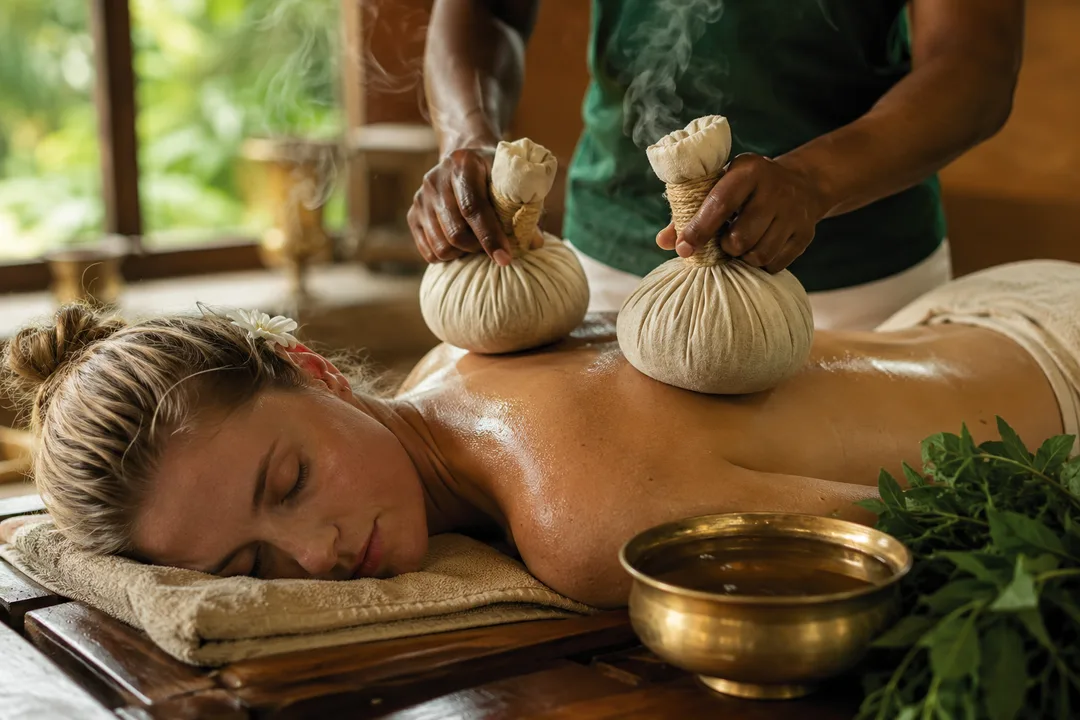
Ela Khizhi (Patra Potala Sweda). A pouch massage with herbal leaves soaked in warm oil. Traditionally applied for joint and lower-back pain, stiffness.
Mutir Kizi (Kulata Sweda). A pouch massage with ground peas. Traditionally applied for pain and stiffness in the joints.
Hot oil treatment
What a shame. Warm medicinal oil is held on the lower back in «walls» of herbal paste for about 30 minutes. Traditionally applied for back and lower-back pain.
Urovesti. The same on the chest area, about 45 minutes. Traditionally applied for pain and tension in the thoracic region.
Whitebread. Warm herbal oil is held in a cap on the head for 15–60 minutes as a course. Traditionally applied for insomnia, migraine, for care of the scalp.
Netra Tarpana. A soothing procedure for the eyes: a «wall» of herbal paste is made around the eyes and medicinal oil is held within it. Helps with tiredness and dryness of the eyes, especially with computer work.
Dhanyamla Dhara. Warm herbal liquids are rhythmically poured onto the body for 45–60 minutes. Applied as a warming, relaxing procedure.
Karnapurana. Instilling warm medicinal oil into the ears. Traditionally applied for discomfort in the ears.
Masks and compresses of medicinal herbs
Herbal face mask. After a face massage, herbal remedies and creams are applied; tones the skin.
Lebanon. A medicinal herbal paste on the problem areas. Traditionally applied for skin inflammations, joint pain.
Thalam. Herbal powder with oil on the crown of the head, 20–45 minutes. Traditionally applied for sleep disorders, headache.
Thala Pothichil. A herbal paste on the scalp (according to the predominant dosha), 30–45 minutes. Traditionally applied for sleep disorders, for care of the hair and scalp.
Picture. A cloth soaked in medicinal oil on the joints or spine. Traditionally applied for joint and back pain.
Sarvangaksheeradhara. Warming the body with steam from a mixture of herbs and milk. Applied as a restorative procedure for disorders of the nervous system.
Rinses
Gandusha / Kabala. Medicinal oil or a decoction is taken into the mouth, held and spat out. Traditionally applied for care of the oral cavity, strengthening of the gums and teeth.
Netra Sekam. Rinsing the eyes with a herbal decoction (triphala churnam). Traditionally applied for eye care.
Who Panchakarma is especially relevant for
Panchakarma is indicated not «for everyone across the board» but for those in whom, according to Ayurvedic ideas, factors of chronic dosha imbalance have accumulated. It is considered especially for:
- residents of big cities — stress, poor air, irregular eating, disrupted sleep;
- after the age of 35–40 — as deep prevention of age-related changes;
- in chronic conditions, when symptomatic treatment does not give a lasting result (as a supplement to the main treatment, not instead of it);
- in the recovery period after infections (including COVID-19), courses of antibiotics, hormone therapy;
- those who want long-term maintenance of health, rather than a short-term «improvement in well-being».
Shortened or home programmes are not a full Panchakarma: a lasting result is traditionally given by a full course — as a rule, 21–42 days with obligatory Purva- and Paschatkarma at a specialised clinic.
What is usually noted after the course
The effect is individual and depends on the initial condition, the length of the course and the way of life after it. Most often after a full Panchakarma people note: a feeling of lightness in the body and reduced puffiness, more even digestion and sleep, a surge of strength and reduced fatigue, a calmer state, improvement in the condition of the skin. This is not a guaranteed result.
Restrictions during Panchakarma
A Panchakarma course involves certain restrictions. For example:
- a categorical refusal of alcohol, cigarettes and narcotic substances;
- a minimum of vigorous exertion (running, swimming, long walks);
- less sunbathing, time at the computer, television and reading.
An integral part of the course is diet. Along with diet, patients are usually offered to master pranayama (breathing practices) and asanas.
Where to undergo Panchakarma procedures in India


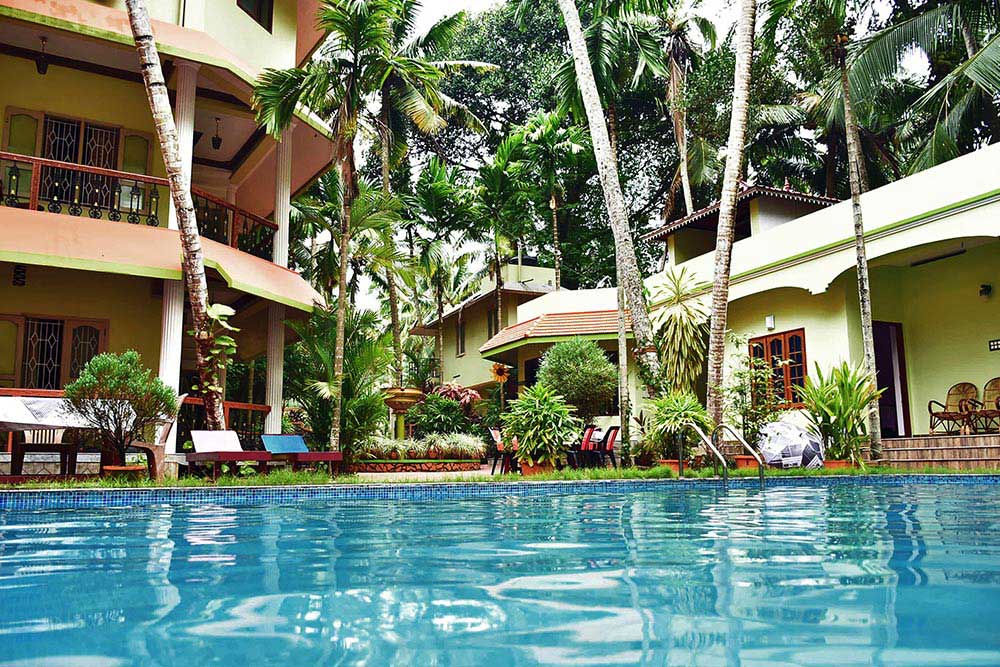


Rejuvenation by the Panchakarma method
Restorative procedures are usually undergone after the main cleansing course. The aim is to raise vitality and working capacity, to reduce fatigue; an improvement in the condition of the skin is traditionally noted. Most often the programme includes:
- steam procedures with herbs and milk vapours;
- baths with herbs and infusions;
- herbal massages of the arms and legs;
- massages with creams.
Weight loss with Panchakarma
During the course, meals become light and regular, a routine appears, procedures are done every day — against this background reduced puffiness and weight loss are often noted. But a lasting result comes not from the trip itself but from the habits a person returns home with; Ayurveda does not promise a guaranteed «minus so-many kilograms».
For details on how Ayurveda works with weight — nutrition, routine, which procedures are applied and what the course really gives — see the page Ayurveda for weight loss.
Ayurveda of beauty
Ayurvedic skin care is marma therapy (working with biologically active points), cleansing masks, inhalations and massages. Such procedures help the skin to look fresher and better cared-for; the result is individual.
Ayurveda for relieving stress
Chronic tension, anxiety and sleep disturbances are one of the most frequent reasons people turn to Ayurveda. The approach here is not a «sedative on demand» but work with routine, nutrition and the body at the same time.
How Ayurveda explains stress. According to the ideas of the tradition, responsibility for movement — breathing, nerve impulses, the speed of thoughts — lies with Vata dosha. Its excess is associated with what a person describes as «thoughts racing»: restless sleep, anxiety, absent-mindedness, chilliness, difficulty relaxing. Therefore the Ayurvedic anti-stress approach is built on «calming» vata: adding warmth, regularity and gentleness.
What the approach consists of:
- Mode — a constant time for sleep and waking, dinner not late, less evening screen: irregularity is traditionally considered one of the main factors that throw vata off balance;
- Nutrition — warm, freshly cooked food on a schedule instead of cold and «on the run»;
- oil procedures — oiling and Ayurvedic massage: in the tradition warmth and oil are considered the main remedy against the dryness and mobility of vata;
- practices — gentle yoga, breathing exercises, meditation;
- herbal formulations — selected by the doctor individually (more detail — Ayurvedic medicines).
Which procedures are traditionally applied. First of all — Shirodhara (described above, in the block on pourings): warm oil in a thin stream onto the forehead, chosen precisely for deep relaxation and the relief of nervous tension. Oil and steam procedures are also used, and with a pronounced vata imbalance — Bastwhich in Ayurveda is considered the main method of working with vata.
Panchakarma and stress. Individual procedures give a respite, but the course works differently: for 1–3 weeks a person drops out of the usual rhythm — routine, nutrition and sleep are arranged for them, and procedures are done every day. That is exactly why, after a full course, people most often note more even sleep, a calm state and a return of strength. The result is individual and largely depends on the routine a person returns home to.
It is important to understand the boundary: Ayurveda here is traditional support and prevention, not a treatment. With persistent insomnia, pronounced anxiety or a depressed state, a doctor’s help is needed, and Ayurvedic procedures are possible only as a supplement agreed with them.
Frequently asked questions
Traditionally 2–4 weeks (14–28 days). A short course of a few days is not considered a full Panchakarma: for a lasting effect at least 2–3 weeks with a full preparation and restoration are needed.
The set of procedures is not universal — the doctor selects it individually according to your constitution (prakriti), current condition and the aim of the course. This is determined at a diagnosis at the clinic; we will help to select a centre and a doctor to suit your request.
Most procedures (oil ones, massages, pourings) are relaxing and pleasant. The main cleansing actions are carried out strictly under a doctor’s supervision and selected according to the condition, so that the course goes comfortably.
Yes, many clinics offer wellness formats — massages, pourings, oiling without the full cleansing cycle. But a lasting wellness effect is given precisely by the classic Panchakarma course with preparation and the main procedures.
Ready to try Panchakarma in practice? We will select a clinic and a programme to suit your task.