
−15%
Sale
Ayurvedic preparations are traditional therapeutic and preventive remedies of Indian medicine: most often plant-based (less often with minerals or products of animal origin), which an Ayurvedic doctor selects to suit a person’s constitution and prescribes in courses. Their task in the Ayurvedic model is not to «knock down» an isolated symptom but to support the balance of the doshas, digestion (agni) and the working of the tissues, so they are usually taken for a long time and in combination with nutrition and a routine.
Below, in simple terms: what kinds of Ayurvedic preparations there are, what they are made from and how, how they are prescribed, and what is important to know about safety.
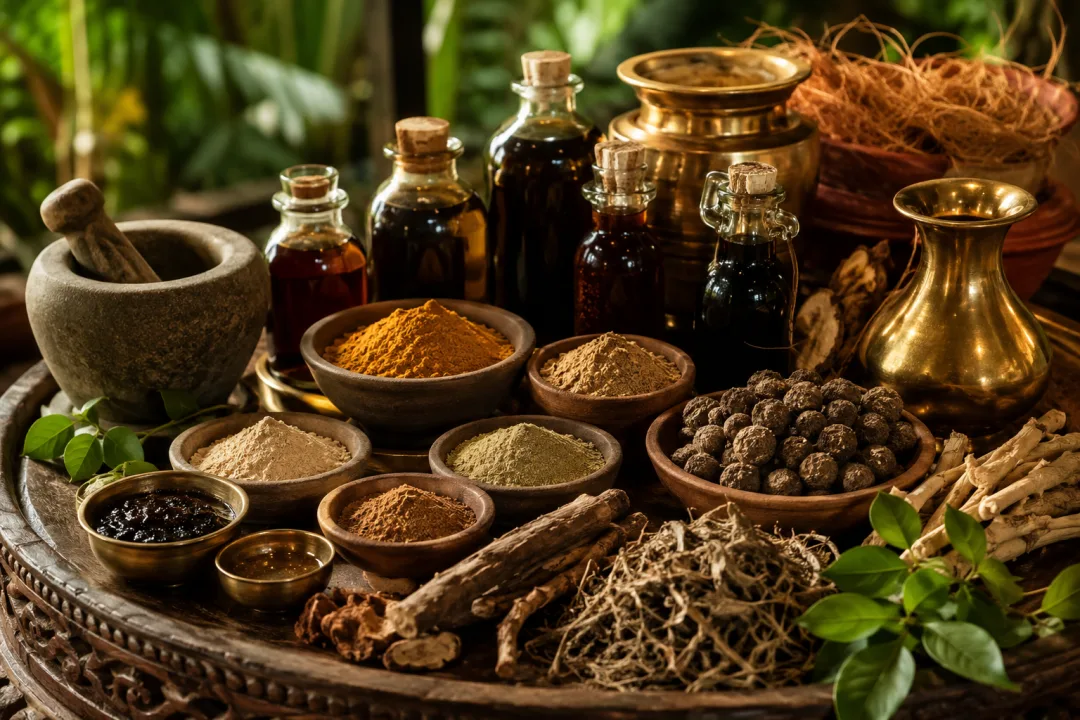
It is a remedy prepared according to the recipes of classical Ayurveda — from herbs, spices, oils, minerals and other natural components processed in a special way. Unlike the familiar medicine «for a disease», an Ayurvedic preparation is selected to suit the Prakriti (innate constitution) and the current imbalance: the same remedy may suit one person and not suit another. How the doshas and the constitution work is on a separate page.
Classical Ayurveda distinguishes preparations by form and method of preparation:
The basis of most preparations is plants: the roots, stems, bark, leaves, flowers and fruit are used. To them are added spices, oils, clarified butter, honey, milk, and in some recipes — minerals and metals.
A key feature of traditional production is the preliminary processing of the raw material (shodhana, «purification»): herbs and especially minerals undergo multi-stage preparation — soaking, washing, calcining, grinding with plant juices. For bhasmas this is dozens of processing cycles. The goal, according to Ayurvedic ideas, is to make the component absorbable and remove its «coarse» properties. Such remedies are prepared over a long time, in batches, according to the prescriptions of the classical treatises.
Ayurvedic preparations are not a «dietary supplement following the instructions on the box», but part of a programme that the doctor builds:
That is precisely why in Ayurveda preparations are not so much «bought» as obtained on a doctor’s prescription — including at Ayurvedic clinics, where people go for a full course of treatment in India.
Plant preparations are generally considered gentle, but «natural» does not mean «harmless in any quantity»:
A few compositions that are encountered most often:
For specific conditions — Joints, Digestion, the liver and others — the compositions are chosen by the doctor; these are separate topics of the corresponding pages.
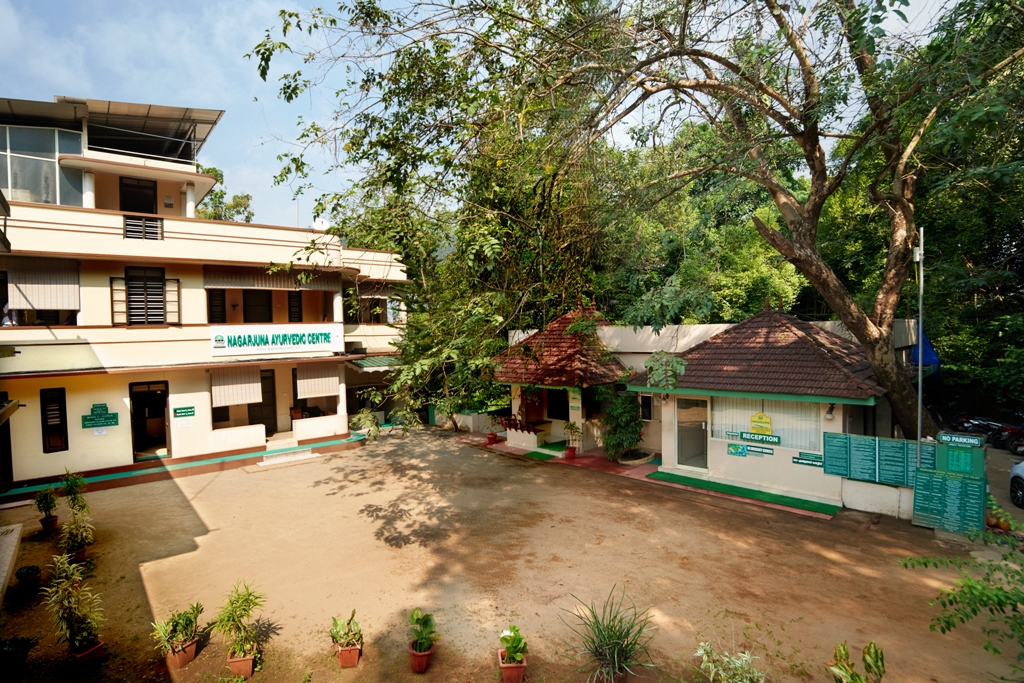
Kaladi, Kerala


Guruvayoor, Kerala

Guruvayoor, Kerala







Guruvayoor, Kerala



It is a natural remedy (most often herbal) according to the recipes of Indian medicine, which is selected to suit a person’s constitution and taken as a course to support balance, rather than as a pill «for a symptom».
Plant compositions are usually gentle, but mineral ones (bhasmas) may contain metals, and any preparations have contraindications. Safe means on a doctor’s prescription and from trusted sources.
In some mineral preparations (bhasmas) — yes, metals are present by the recipe, and in individual market samples an excess of them has been found. That is why a qualified doctor and a certified manufacturer are important.
Certain gentle compositions (Triphala, for one) are used independently too, but the selection to suit your condition, the dosage and the course are better entrusted to a doctor — especially when it comes to mineral preparations or a chronic illness.
Ayurveda works with metabolism and the balance of the doshas through nutrition, routine and preparations, which may be reflected in weight — but these are not «weight-loss pills» and not a substitute for a healthy way of life.
Often in courses of several weeks or months: in the Ayurvedic model plant compositions have a cumulative effect. The duration is determined by the doctor.
Ayurvedic preparations are remedies of a traditional wellness system, not a substitute for medical care. Do not prescribe them to yourself in cases of illness or when taking medicines — consult a doctor first.
Thank you! Your review will appear on the site after moderation.
Thank you! Your review is now live on the site.
Submit a request – our specialist will contact you and help you choose a programme and clinic to suit your request and budget.
Thank you, we have received your request. Our specialist will contact you shortly to clarify your requirements and assist you with your selection.