
Ayurveda and Ayurvedic medicine — what it means, the main principles and features
What is Ayurveda? Ayurveda is a traditional Indian system of medicine and way of life. What the word itself means: from Sanskrit «Ayurveda» is translated as «the science of life» (āyus — life, veda — knowledge). To explain in simple terms: Ayurveda treats not an isolated illness but seeks to restore the balance of the whole body — through nutrition, a daily routine, cleansing procedures and plant preparations selected to suit the constitution of the particular person.
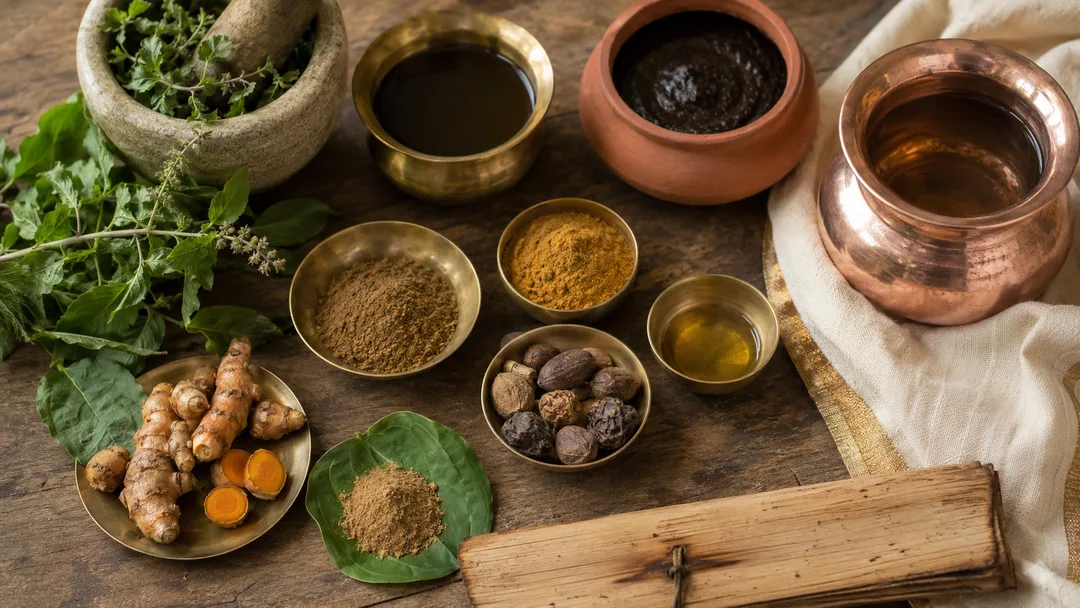
Ayurvedic medicine is an ancient teaching that is still alive and practised: in India and Sri Lanka it is officially built into the healthcare system. At the same time Ayurveda is a traditional system, not evidence-based medicine, and it does not replace treatment by a doctor. Below we look at where it came from, whether it is a science, how it differs from conventional medicine and what it «treats» in its tradition.
What Ayurveda is and where it came from
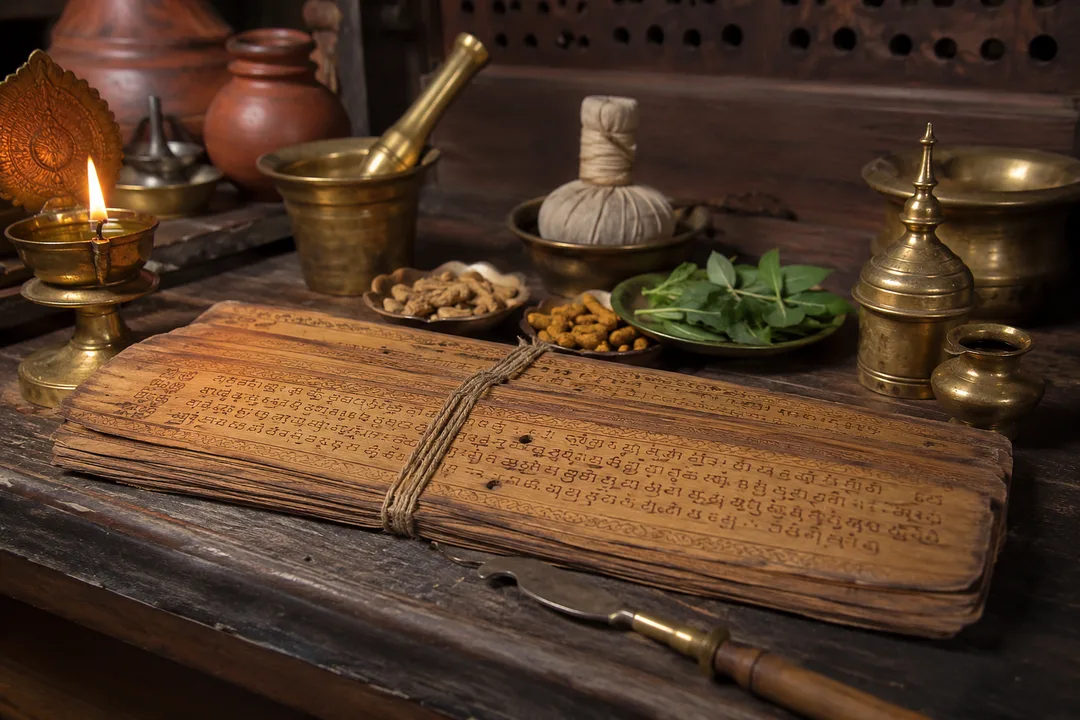
Ayurveda (upaveda — an auxiliary veda) was born in ancient India as part of the great Vedic knowledge about the world and the human being. Traditionally it is considered an upaveda (auxiliary veda) of the Atharvaveda — the fourth of the Vedas. According to traditional ideas, the origins of Ayurveda go back several thousand years; the surviving classical treatises — the Charaka Samhita and the Sushruta Samhita — date to approximately the turn of our era. According to legend, Ayurveda was brought to people by Dhanvantari — an incarnation of the god Vishnu, revered as a divine healer and the patron of Ayurveda — thus the tradition emphasises the divine origin and antiquity of the teaching.
The philosophical basis of Ayurveda is the idea of equilibrium: health is understood as the balance of a person’s inner world (the microcosm) and its harmony with the surrounding world (the macrocosm). Illness in this model is a signal of a disturbance of equilibrium, so Ayurveda is concerned not with suppressing a symptom but with finding the cause of the imbalance and eliminating it — strictly individually.
Connected with this is the idea of the four aims of life, on which the Ayurvedic understanding of health is built: Dharma (purpose and duties), Arta (material well-being), cama (the fulfilment of desires) and Moksha (spiritual liberation). Health in Ayurveda is not an end in itself but a resource for a meaningful life; in the Ayurvedic tradition it is held that chronic stress and dissatisfaction with life affect health over time, including the heart.
Is Ayurveda a science or not?
The direct answer: Ayurveda is not a science in the modern academic sense, but a traditional system of medicine with a centuries-old practice. The WHO regards Ayurveda as one of the traditional systems of medicine, while noting the insufficiency of rigorous scientific research and clinical trials of its methods.
What this means in practice:
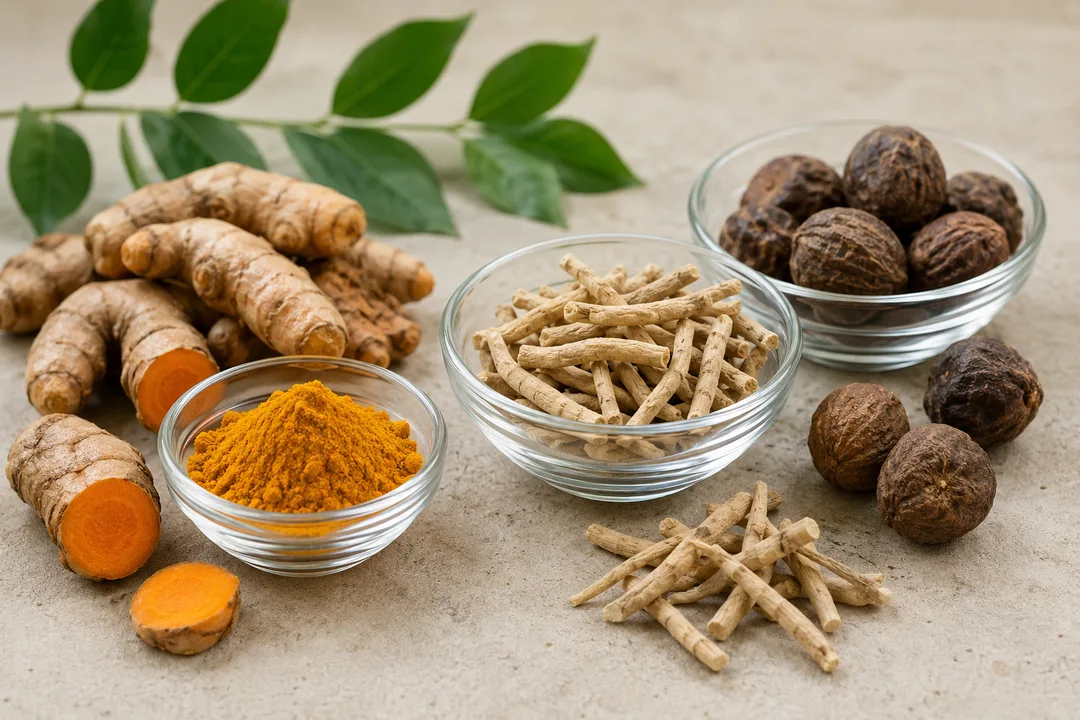
- Where Ayurveda has its strengths. Some of its elements coincide with the recommendations of modern preventive medicine: a sleep routine, moderate nutrition, physical activity, stress management, giving up alcohol and smoking. A number of plants from the Ayurvedic pharmacopoeia are studied by science (turmeric, ashwagandha, triphala), and for some there is encouraging but as yet limited data.
- Where there is no evidence. The concepts of the doshas, «the removal of toxins» and energy balance are traditional models not confirmed by evidence-based medicine. The effectiveness of Ayurveda for specific diagnoses has not been proven in rigorous clinical trials.
- Conclusion. The honest position is this: Ayurveda is a working system of wellness and prevention with a thousand-year history, but it does not replace diagnosis and treatment by a doctor. A sensible format is to use it as a supplement, and in chronic and acute conditions — only after consulting a doctor.
How Ayurveda differs from conventional medicine
Modern clinical medicine works with the disease: diagnosis → treatment protocol. The foundations of Ayurvedic medicine are arranged differently, and its differences add up to an integrated approach:
- Wholeness (holism). In Ayurveda there is no narrow specialisation: it treats not an organ but the whole person — the body, emotions and mind are regarded as a single system living in the rhythms of nature.
- A psychosomatic approach. The emotional state is considered a factor in health: in the Ayurvedic tradition anger is linked with the liver, and chronic fear and anxiety with the kidneys. These are traditional ideas, not clinical diagnoses, but the attention to stress and emotions is a strength of the approach.
- An individual approach. Prescriptions are built not according to a general protocol but to suit the constitution of the particular person (prakriti) and the current imbalance of the doshas: the nutrition, procedures and preparations of two people with the «same» complaint may differ.
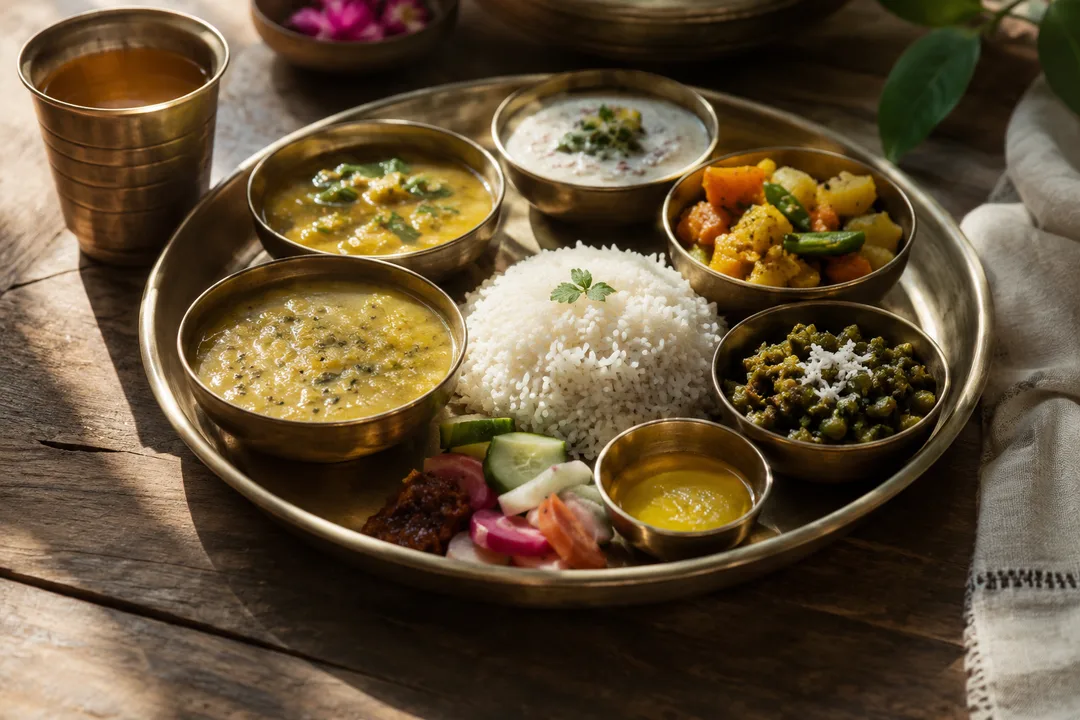
- Way of life as therapy. The three pillars of Ayurvedic health: Excalibur (nutrition suited to your constitution), Vihara (a daily and sleep routine) and Ayurvedic medicine (therapy — from oil procedures and yoga to phytopreparations). Hence the practical rules: an early rise, moderation in food, a predominantly plant-based diet, going to sleep before midnight, regular practices.
- Natural remedies. Ayurveda gives preference to natural preparations — herbs, oils, minerals. It is important to understand: «natural» does not automatically mean safe — the preparations should be selected by a specialist, and the course undergone under a doctor’s supervision (see contraindications below).
What Ayurveda treats
Right away, the framework: in the Ayurvedic model an illness is described as an imbalance of the doshas; below is how the tradition links the doshas with groups of conditions. These are traditional ideas, not clinical diagnoses, and not a substitute for examination by a doctor.
According to the Ayurvedic concept, health is the equilibrium of:
- three energies (doshas): vata (air + ether), pitta (fire + water), kapha (water + earth);
- seven kinds of tissue (dhatu): plasma (rasa), blood (rakta), muscle (mamsa), fat (meda), bone (asthi), bone marrow and nervous tissue (majja), reproductive tissue (shukra);
- three kinds of the body’s waste (mala): urine, sweat, faeces.
A separate concept is ama: this is what Ayurveda calls the undigested remnants of food which, according to the ideas of the tradition, form when digestion is weak, accumulate in the tissues and interfere with their working.
How the tradition links an imbalance of the doshas with conditions:
- An imbalance of pitta is traditionally linked with digestive disorders — gastritis, increased acidity, problems of the liver and gall bladder, skin inflammations.
- An imbalance of vata — with diseases of the joints and spine, constipation, anxiety and insomnia.
- An imbalance of kapha — with a chronic runny nose, sinusitis, bronchitis and asthmatic conditions, excess weight.
For each type of imbalance Ayurveda offers its own set of measures — from adjusting nutrition to course cleansing procedures (detox according to Ayurveda).
Doshas: three types of energy — briefly
According to Ayurveda, a person is born with a unique combination of the five primary elements (ether, air, fire, water, earth), which are combined into three vital energies — tridosha: cotton wool (movement), Pitta (metabolism and transformation), kapha (structure and stability). Their individual combination — Prakriti — determines the build, character, and strengths and weaknesses of health; 3 pure and 7 mixed types of constitution are distinguished.
A detailed analysis of the doshas, the types of constitution and how to determine your own is on the page Doshas in Ayurveda. The Ayurvedic rules of nutrition by dosha and the daily routine are on the page Ayurvedic nutrition.
Ayurvedic procedures and Panchakarma — briefly
The arsenal of Ayurveda is broad: a diet suited to the constitution, oil procedures and massages, steam warming, phytopreparations, yoga and meditation. A central place is occupied by Panchakarma — a course programme of deep cleansing consisting of five classical procedures with obligatory preparation and recovery; it is undergone at specialised clinics under a doctor’s supervision.
The best way to get to know Ayurveda in practice is to undergo a course at a clinic under a doctor’s supervision: Panchakarma tours to India.
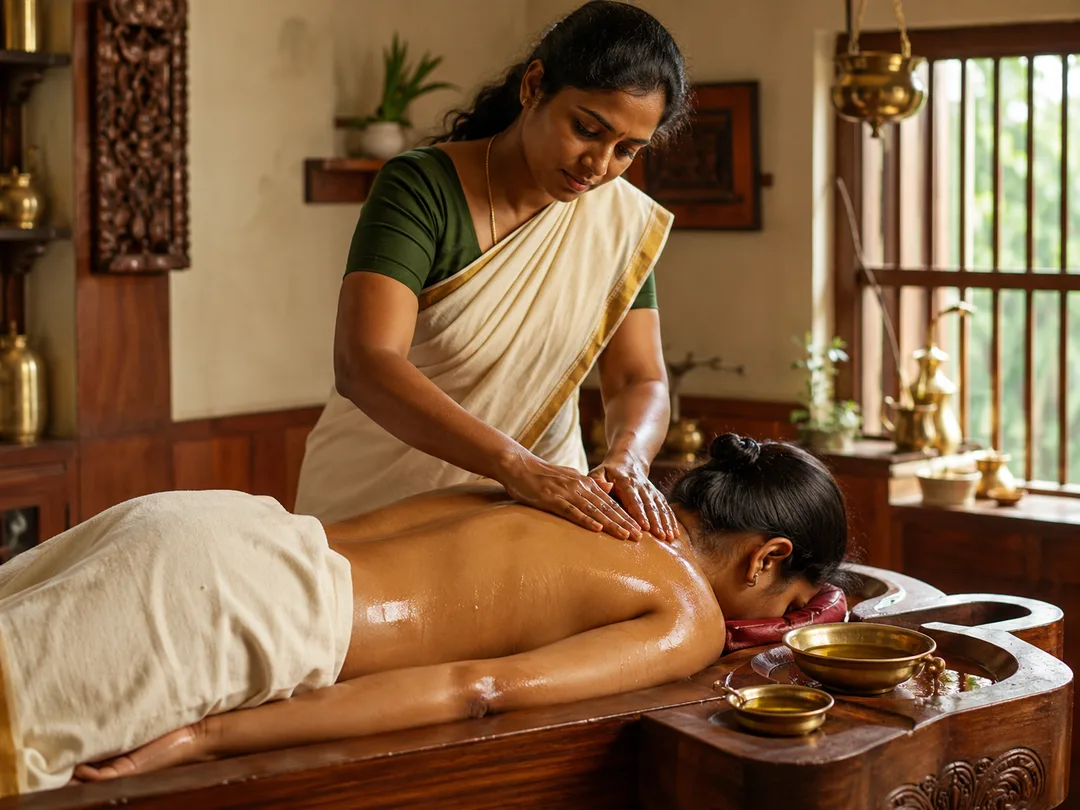
More details: Panchakarma procedures · cleansing the body with Ayurveda · Ayurvedic medicines. Most often people go to Kerala, the homeland of the tradition.
Contraindications and precautions
Ayurveda is capable of doing harm — it is worth knowing this before, not after.
- Self-treatment. An attempt to practise Ayurveda on your own «from books and the internet» is the most frequent source of problems: incorrectly selected preparations and procedures produce the opposite of the expected effect.
- Cleansing practices without preparation. Course cleanses require a diet and giving up alcohol and smoking; without this the body receives an additional load instead of relief.
- Heavy metals in preparations. Some traditional compositions (especially rasashastra — preparations with minerals) may contain mercury, lead or arsenic. Buying Ayurvedic preparations «second-hand» and without a specialist’s prescription is dangerous; licensed clinics use certified pharmacies.
- Acute conditions. Ayurveda must not be used to replace emergency care and the treatment of acute illnesses requiring the intervention of a doctor or surgeon.
- Pregnancy, breastfeeding, chronic illnesses. Only under the guidance of an experienced specialist and after consulting your attending doctor.
Ayurvedic centres in India where you can get professional help

−15%
Sale
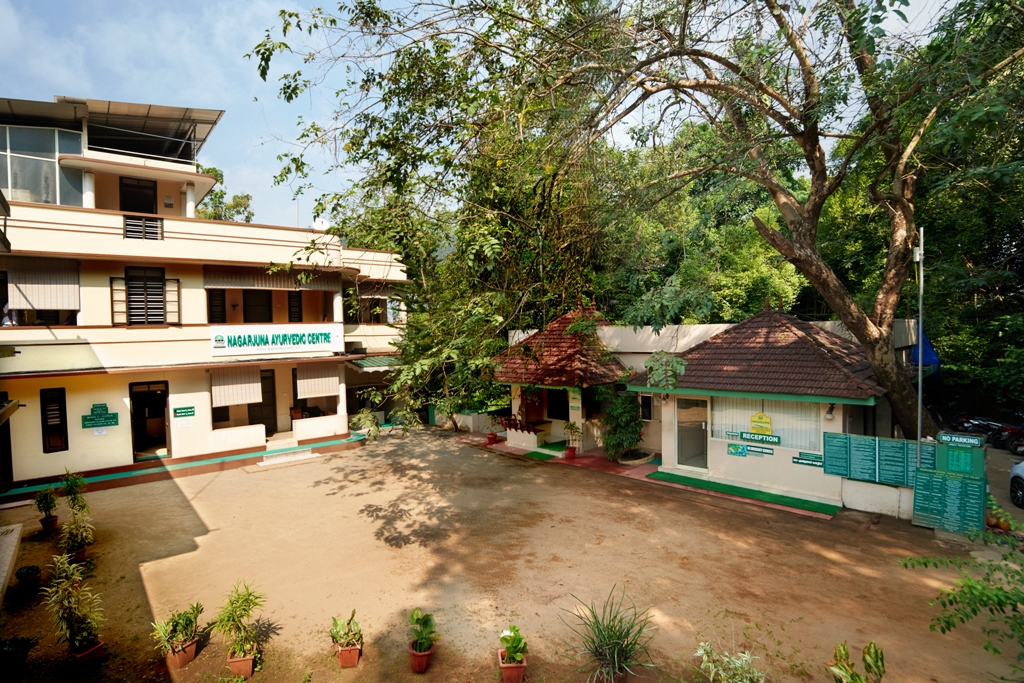
Ayurveda at the Nagarjuna Centre
Kaladi, Kerala

−10%
Sale


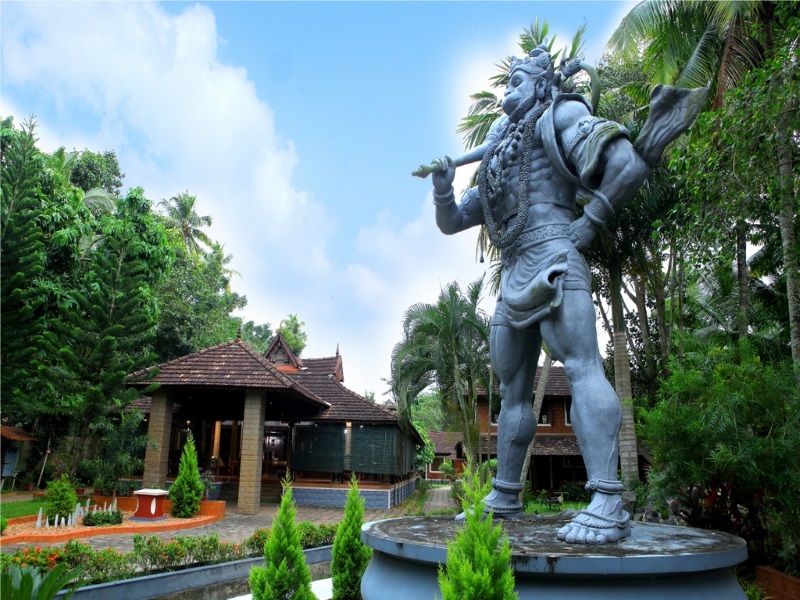





Rajah Beach Ayurvedic Clinic
Guruvayoor, Kerala

Sale


Frequently asked questions
Neither one nor the other in the pure sense. It is a traditional system of medicine: it has an internal logic, a thousand-year practice and elements that coincide with modern prevention (routine, nutrition, stress management), but its key concepts (doshas, ama) have no scientific evidence. It is correct to treat it as a traditional wellness system, not as a science or a «con».
In India and Sri Lanka — yes, officially: Ayurvedic doctors study at specialised colleges, and the system is built into state healthcare. From the point of view of evidence-based medicine, it is traditional (complementary) medicine: it can complement but not replace conventional treatment.
It is more correct to say «what it traditionally works with»: chronic digestive disorders, skin conditions, pain in the joints and back, sleep disturbances, the after-effects of chronic stress, recovery and prevention. Acute conditions and illnesses requiring urgent care are not its field.
No. Ayurveda is the whole system: philosophy, diagnosis, nutrition, preparations, way of life. Panchakarma is a part of it: a course programme of deep cleansing consisting of five procedures. In detail — on the page Panchakarma procedures.
Basic things — a daily routine, moderate nutrition, relaxation practices — yes, that is safe. Everything to do with preparations and cleansing procedures — only with a specialist: self-selection risks, at best, a lack of effect and, at worst, poisoning (including by heavy metals in uncertified preparations).
The homeland of Ayurveda is ancient India. According to traditional ideas the knowledge is several thousand years old; the oldest surviving treatises — the Charaka Samhita and the Sushruta Samhita — date to approximately the turn of our era. Today the main centre of the living tradition is the south of India, above all Kerala.
Ready to try Ayurveda in practice? We will find a clinic and a programme to match your goal.