
−15%
Sale
Basti is one of the five main cleansing procedures of Ayurvedic Panchakarma, the cleansing of the large intestine. In classical Ayurveda basti is carried out by introducing medicinal oil and herbal formulations into the rectum; in yoga there is also a related yogic practice — sahaja basti: cleansing of the gastrointestinal tract with water by means of a set of asanas. In Ayurveda basti is considered one of the main methods that balance cotton doll.

A caveat right away: Ayurveda is a traditional wellness system. Basti does not replace the treatment of specific illnesses; in chronic conditions it is undergone as a supplement and only under a doctor’s supervision.
According to Ayurveda, the condition of the intestines largely determines a person’s well-being. According to the ideas of the tradition, with weak digestion ama is formed — undigested remnants of food; it is held that over time it accumulates in the tissues and hinders their normal work. It is with this that Ayurveda associates many disturbances of well-being, which is why it considers basti one of the key methods of cleansing.
Two main types of the procedure are distinguished:
Basti acts first of all on the large intestine. Unlike an ordinary enema, here the composition, volume and frequency are selected by the doctor — to suit the person’s constitution and condition. That is why there are several types of basti: cleansing, oil, nourishing, soothing. Only a qualified specialist can choose the right type, monitor the patient’s condition and, if necessary, adjust the course.
In Ayurveda the vata dosha is responsible for movement in the body — from intestinal peristalsis to the work of the nervous system. Its main site of localisation is considered to be the large intestine, so with a vata imbalance the tradition turns first of all to basti. The signs of excess vata, in which the procedure is traditionally considered, are dryness, a tendency to constipation and bloating, restless sleep, anxiety, pain and stiffness in the joints and lower back.
By acting on the large intestine, basti, according to Ayurvedic ideas, helps to «calm» vata and support its balance. This explains why the indications for the procedure are so often connected precisely with vata-type conditions.
From the point of view of Ayurveda, basti first of all balances cotton doll — the large intestine is considered its main site of localisation. Therefore the procedure is traditionally applied in vata-type conditions:
This is not a guarantee of result and not a replacement for treatment: in chronic diseases basti is undergone as a supplement, by indication and under a doctor’s supervision. About the place of basti among the other cleansing procedures — on the page Panchakarma procedures.
A full Panchakarma basti is not done «once off» — it is a course of procedures, and each goes according to a certain scheme under a doctor’s control.
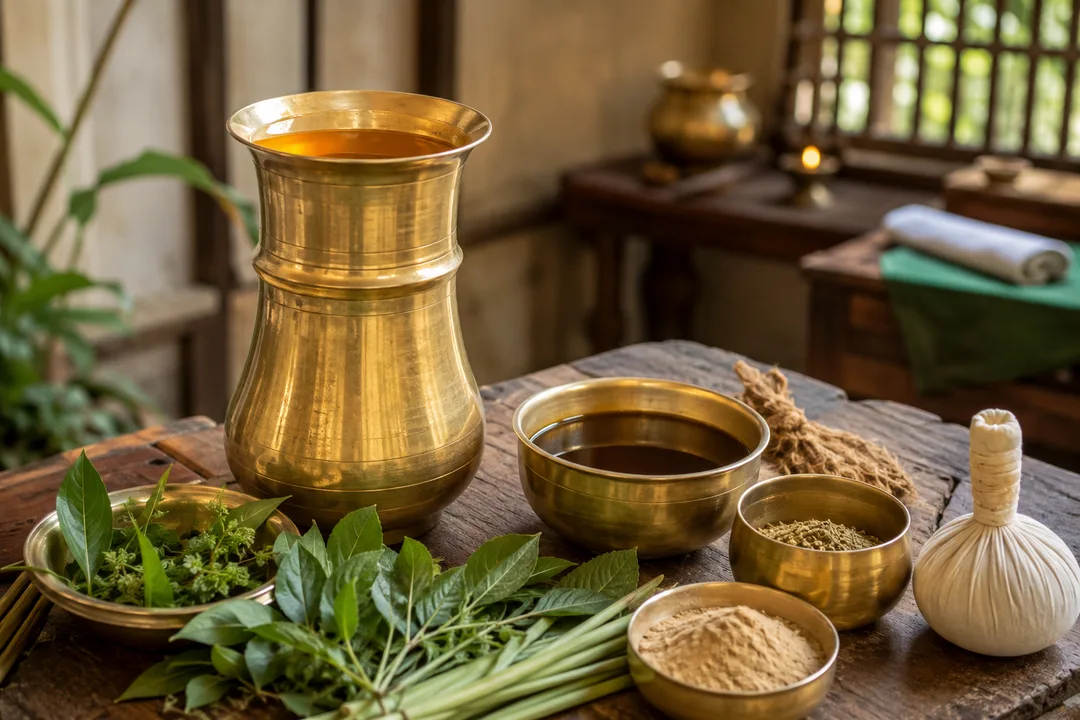
Preparation. Before the enema itself, abhyanga is done — an oil massage of the abdomen and lower back — and light warming (svedana). According to Ayurvedic ideas, this relaxes the tissues, «directs» vata downwards and prepares the intestines. The patient is asked in advance to empty the bladder and the intestines.
Setting. The procedure is carried out lying on the left side — this way the composition passes more easily into the large intestine. Two types of basti are used, and their retention time differs:
In the classical scheme the cleansing niruha comes first, and the nourishing anuvasana is given already against the background of good cleansing. A sign of a correctly carried-out basti is considered to be a feeling of lightness in the body and that the composition comes out freely, having «gathered» the contents of the intestines; vata, according to Ayurvedic ideas, moves downwards in this. The whole course is monitored by a specialist — they select the compositions, the volume and the alternation of procedures; independent administration of a therapeutic basti without control is not recommended.
How many procedures and in what combination to prescribe, the doctor decides according to the person’s condition. Traditionally three main schemes are distinguished (in them the oil anuvasana and the decoction niruha are alternated):
Separately distinguished is Mattress-bast — a small-volume oil enema of gentle action. It is applied for weakened patients and for support: it does not require a strict regimen and is considered the most sparing.
A basti course gives a result not only through the procedures themselves but also through the regimen around them. Since basti works first of all with the vata dosha, nutrition and lifestyle during the course are arranged so as not to «stir up» vata:
After the cleansing niruha basti, light warm food is traditionally given — boiled rice with a lean soup. Specific nutrition recommendations during the course are always given by the doctor, taking into account the condition and accompanying illnesses.
Besides clinical basti, in yoga there is sahaja basti — a simplified way of cleansing the intestines with water. It is classed among the shatkarmas (yogic cleansings) and is mastered under the guidance of an experienced mentor: without preparation and command of the technique of working with the abdominal muscles it cannot be performed correctly.
Classically, sahaja basti is done in the morning on an empty stomach. A solution is prepared: about one and a half litres of warm water, a tablespoon of salt without additives or flavourings and the juice of one lemon (if possible the volume is brought up to three litres). Then a set of asanas is performed that creates an internal massage and promotes the cleansing of the gastrointestinal tract. Traditionally it includes:
Between the poses nauli is added, and at the end — rest in shavasana. It is important to observe the principle of non-violence (ahimsa): not to overload the body and to rest when necessary. If the asanas are not accessible, the liquid comes out by itself in about a couple of hours, but the maximum effect is traditionally associated with the full set of correctly performed poses.
In classical hatha yoga there is also a more complex variant of the yogic basti — Jala Basti: water is drawn into the large intestine through the anus (sitting in water, working with the abdominal muscles — nauli and uddiyana bandha) and then expelled. This is an advanced practice, mastered only under the guidance of an experienced mentor. Sahaja basti is a gentler and more accessible alternative.
At home dry and water basti are practised.
Dry bast is performed without water, in the paschimottanasana pose:
Water (wet) basti resembles an enema without devices: it is done in a container with water (for example, in a bath), squatting; the water level is roughly up to the waist. Through a short tube (10–12 cm), carefully inserted into the anus, the water is «drawn in» through the work of the abdominal muscles. Creating the necessary vacuum in the abdominal cavity is made possible by madhyama nauli — control over the abdominal muscles, which is not mastered at once. When the first portion of water has entered, the tube is closed off with a finger and the breathing is restored. Repeat until the intestines are filled, after which perform a simple inverted pose.
These practices require preparation and caution. With any gastrointestinal diseases and doubts, a doctor’s consultation is needed first.
Basti in any form can be dangerous and is not carried out:
In addition, active work with the abdominal muscles (nauli, madhyama nauli) is contraindicated in pregnancy, high blood pressure, umbilical hernia, gallstones, gastric ulcer and cardiovascular diseases. Before starting Panchakarma or basti, a consultation with an Ayurvedic doctor is necessary, and the course itself should preferably be undergone under supervision.
According to Ayurveda, the condition of the intestines largely determines a person’s well-being. With age the tone of the muscles decreases, constipation appears, and according to Ayurvedic ideas — ama accumulates. Basti is more than an enema: it not only cleanses the intestines but also, as is held, helps to support their normal work in the future.
At the same time it is important to remember: basti is not a «cleanse from toxins» and not a replacement for treatment, but a traditional method of Ayurveda with its own indications and contraindications. The accompanying practices of yoga and meditation help to relax and relieve tension, and for a lasting result Ayurvedic doctors recommend keeping to a diet and a regimen.
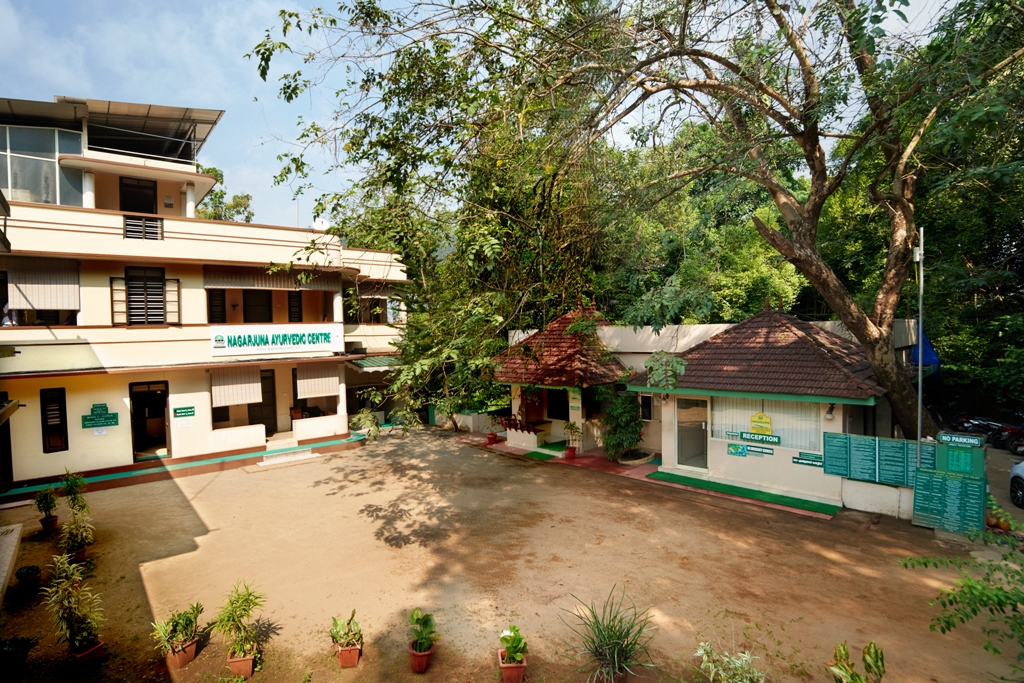
Kaladi, Kerala


Guruvayoor, Kerala

Guruvayoor, Kerala

Kuttanad, Kerala
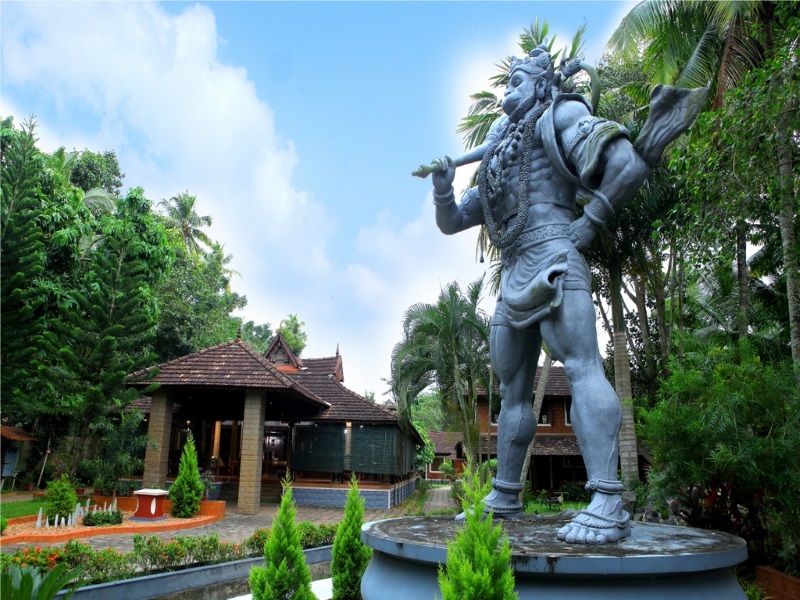





Guruvayoor, Kerala



An ordinary enema is just water for emptying the intestines. Ayurvedic basti uses warm medicinal oils and herbal decoctions, and the doctor selects the composition and course individually; the aim is not a one-off cleansing but work with the balance of the vata dosha.
No, the procedure is not painful. Many describe the oil (sneha) basti as gentle and relaxing; minimal discomfort is possible. Everything is done under a specialist’s supervision.
Basti is done as a course (several procedures according to a scheme), usually within Panchakarma and by a doctor’s prescription — not as a daily everyday practice.
No. Ayurvedic basti is a therapeutic enema with oils/decoctions under a doctor’s supervision. Yogic (jala/sahaja basti) is an independent practice of cleansing with water in hatha yoga. The names are similar, but these are different things.
Ready to try basti in practice? We will select a clinic and a programme to suit your task.
Submit a request – our specialist will contact you and help you choose a programme and clinic to suit your request and budget.
Thank you, we have received your request. Our specialist will contact you shortly to clarify your requirements and assist you with your selection.